By TJ Witham on Sep 16, 2026, 2:39:36 PM
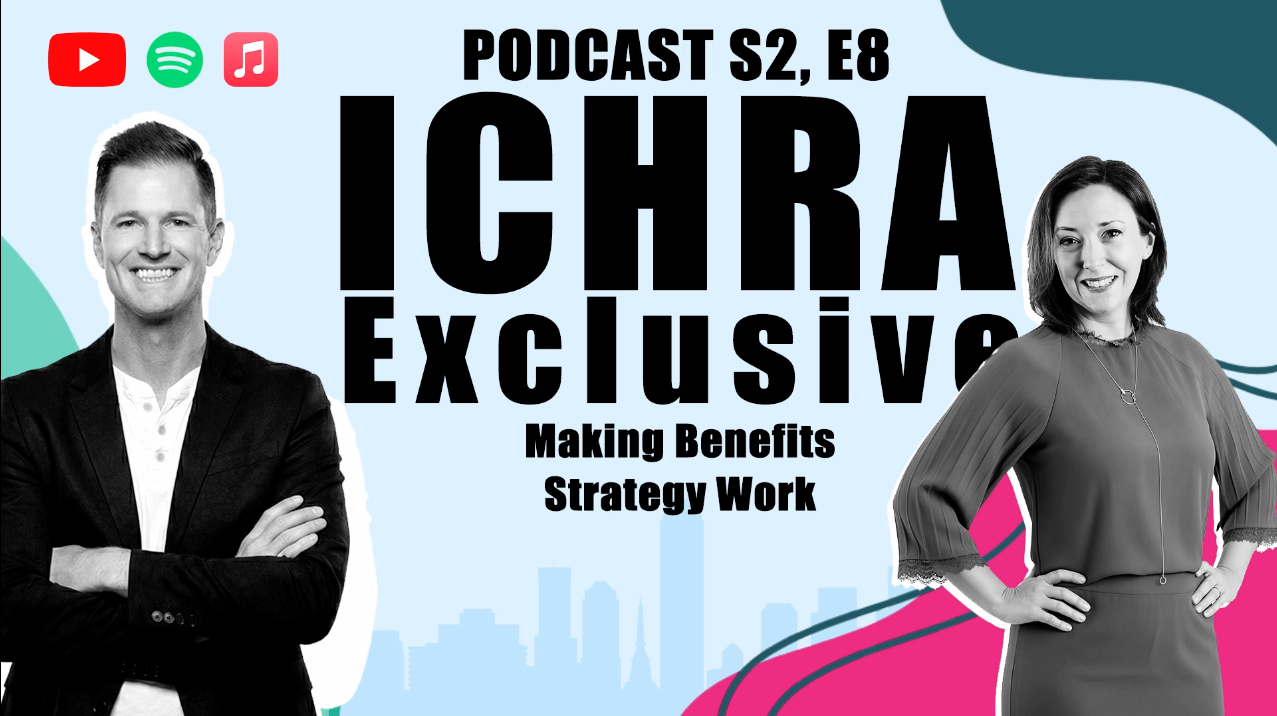
Health benefits don't succeed on the plan alone. They succeed on how the people side is handled, and that's exactly where Brenna Whitaker lives.
The ICHRA Exclusive Podcast is back with Brenna, Co-Founder and VP of HR Services at Milestone Business Solutions and a SHRM-SCP who helps scaling businesses and startups turn their back office into a strategic advantage. With more than 20 years in HR, she knows how benefits decisions actually land with employees and how the right approach moves a company forward.
We get into how rising healthcare costs are showing up for her clients, where she starts when building a benefits strategy, and how she helps them weigh one option against another. Brenna also walks through how she spots when ICHRA (now called CHOICE Arrangements) is the right fit, how the rebrand from ICHRA to CHOICE could reshape the way employers and employees understand the model, and what she hopes will change and mature in the CHOICE Arrangement landscape over the next five years.
If you're building a benefits strategy, weighing your options, or thinking about how to handle the human side of a benefits shift, this one's for you.
Watch or listen to the ICHRA Exclusive podcast
Episode transcript
Brenna Whitaker: We've worked with clients who they want to come in and they want to offer a a Cadillac benefit plan from day one. They want to cover 100% of the the premium cost. And these are great benefits, right? They can really help in in attracting and retaining talent. The question is are you structured in a way that this is economically feasible for you as an organization when you are at 50 employees, when you're 100 employees. It's great to give. It's really difficult to take away.
TJ Witham: Welcome back to the exclusive podcast. Benefits don't succeed on the plan alone. They succeed of how people serve people which is exactly where today's guest lives. Brenna Whitaker, co-founder and VP of HR services at Milestone Business Solutions, has over two decades of HR experience. Today, we'll cover the rising cost of healthcare and how Milestone positions benefits to clients and where fits.
Maybe let's start with, tell us about kind of what you all do and the types of clients and the work that you guys do for employers across the country.
Brenna Whitaker: Yeah, absolutely. Milestone is based in Indianapolis, and we work with clients across the country in a variety of industries. We provide comprehensive, strategic back-office solutions, focusing on accounting, HR, and payroll. We partner with our clients through many different stages that they go through. I personally lead our HR and payroll teams. I let the smart people do all the numbers stuff, and I work with our HR and payroll clients.
TJ Witham: I love that. Just for the audience, you have clients coast-to-coast. As we've gotten to work more together over the last couple of years, small to medium-sized businesses tend to be the niche where you do a lot of your best work. Are there any regional pockets you don't have clients in, or is it really coast-to-coast across all 50 states?
Brenna Whitaker: We have clients in just about every state at this point across a variety of industries, but we seem to be a little more concentrated in professional services and tech companies—really a little bit of everything. We've found that when companies align with our values and we're able to come in and make an impact, we tend to have the most successful long-term relationships.
TJ Witham: Yeah, I'm thinking about some of the mutual clients that we serve together. You do work outside of even those hotspots. One of the first clients we ever worked on together where they offered an ICHRA administered by Remodel, but utilized Milestone's HR support, was an auto dealership in our backyard. You have industries and hotspots you tend to do more volume with, but your solutions can benefit every industry based on client need.
Brenna Whitaker: Yeah, it really does translate pretty well into most industries, which is great. The team loves it because there's always something new to learn.
TJ Witham: Let's talk about one of the most growing hot topics for small-to-midsize businesses this year, and I think for years to come: healthcare costs keep climbing across the board. Small-to-midsize businesses are feeling that, especially in the SMB segment, which represents a lot of your work and ours.
How are you seeing that show up on the client side? How does that shape the way you guide those employers during this part of the year, as we get close to renewal season and companies start having to think about alternative ways to deliver health benefits?
Brenna Whitaker: It is a big conversation, especially this time of year. Not only are we getting a lot of renewal data for clients, but they're also trying to plan their budgets for next year to see what they should allocate for a reasonable spend on benefits. For the vast majority of our clients, benefits are the biggest expense they have after salary expenses.
For some startups we work with, this might be relatively new. They may have put their first benefit plan into place and are getting hit with that first renewal, so they don't have the precedent or experience to know what to expect, and it can be quite a shock.
There are a couple of things we do. First, we make sure they have a great broker partner or industry partners so they aren't surprised and can have conversations throughout the year to be appropriately prepared.
I'm also finding that business owners are very open to exploring more creative avenues. That's something relatively new I'm seeing. Whether it's a changing business owner demographic or people just having had it with continuous healthcare cost increases, they are more open to exploring alternatives than in the past.
We might brace ourselves to discuss the pros and cons of investigating out-of-the-box solutions when a client gets a high renewal, and the clients respond with, "Great, let's talk about it!" They are ready to investigate, which makes our job easier as we partner together to find what makes the most sense for them.
TJ Witham: A couple of things you said there that I love: Milestone works with best-in-class broker partners where you serve as the HR leader and the bridge between the broker partner and benefits for the organization.
What we've found different this year is that many broker partners brought ICHRA to the employer earlier, so a lot of ICHRA education happened well before the renewal was delivered. Executives are able to understand this change to—or should I now say—the CHOICE Arrangement. (By the time we publish this, the PR should be announced that ICHRA is changing to CHOICE, so sorry if I say ICHRA another 10 times over this podcast; it's been deeply ingrained for so many years.)
Educating the employer far in advance allows you to help them navigate change management, how to roll it out to employees, and how payroll and pre-tax deductions will vary with a CHOICE Arrangement. From a payroll sync and deduction standpoint, the more runway we have, the better we can roll out the change.
Have you seen CHOICE evaluated earlier for employers considering it this year compared to prior years?
Brenna Whitaker: It's not even just that it's being evaluated earlier; I would say we are seeing brokers bring it to the table for the first time. In the first few years, it would only get mentioned if we brought it up as an option, because brokers either weren't familiar enough with it or didn't feel it was the right option. So it wasn't being brought up at all.
When working with clients who have never put a benefit plan in place, we do a lot of initial setups to help them understand what makes sense, what they can afford, and what will yield the right outcome for employees. Having a variety of options is helpful because there is no one-size-fits-all.
We often translate for our clients. We play that role in between, as the language in group benefit or ICHRA worlds can be overwhelming—an alphabet soup for business owners. Translating and bringing things to the table earlier helps everyone reach the end goal of putting the right thing in place for the company and employees.
You touched on the education piece, which is so important. When something is new, benefits is the one area where no one wants to take risks or go down a path where they don't feel fully comfortable. You want employees to have something you feel good about. Making a decision impacting healthcare without fully understanding it is not the best scenario.
Ensuring owners have time to feel fully educated is crucial because it is different. We can't just say, "It's going to feel the same to your employees." There are many positives, but they must fully understand. Times where it hasn't been successful stem solely from a lack of education, support, and resources. That is the difference maker.
It comes down to presenting options, being transparent about pros and cons (since everything has both), and taking time to review and make the right choice. We've all experienced rushed open enrollments and last-minute renewal decisions; it's stressful for the team and the organization, and you can't assume you ended up with the best option. Early education and bringing options to the table are extremely important for the best outcome.
TJ Witham: I love that. Backing up, you talked about working with companies new to coverage that are offering health benefits for the first time. ICHRA can be a nice on-ramp for first-time benefits. What other popular first-time health plan options outside of ICHRA are you seeing for new-to-coverage groups in 2026?
Brenna Whitaker: If they aren't offering an Anthem or UnitedHealthcare plan, we've had a lot of luck with small businesses opting for a QSEHRA route. MEWA participation has also been pretty solid.
While some clients consider non-tax-advantaged options, we steer away from that to get something structured and tax-advantaged for the organization that provides consistency for the team. If they aren't going the ICHRA route or fully insured group benefit route, we see QSEHRA or MEWA options working well.
We also consider where the company plans to grow over the next few years. If a company has 5 employees now but plans to grow to 60, 75, or 100 over a couple of years, that impacts what they should put in place. It's important to think beyond the current plan year.
When finding the right structure, you need to know if you can still offer it in 2, 5, or 10 years. That could be for financial reasons or because headcount causes you to outgrow an option. Some clients want to offer a Cadillac plan from day one covering 100% of premiums. Those are great benefits for attracting talent, but the question is whether it's economically feasible at 50 or 100 employees. It's great to give, but really difficult to take away.
We work with clients to think through scalability—not just for this year, but for 2 to 5 years out—to ensure long-term feasibility across their total rewards package.
TJ Witham: What you said over the last few minutes would make me feel very comfortable as a business owner having Milestone lead my benefits planning, especially as a new 5-to-10-person company looking down the road.
To recap: you don't love non-tax-advantaged plans, and you love thinking long-term so you don't have to take things away later, which is organizationally difficult. Remodel has witnessed that process firsthand working with mutual clients where you handle HR and we administer.
Next question: ICHRA is not the right fit for every employer, and at Remodel, we're very forward about that. What makes a client not a good fit for ICHRA at this point in time?
Brenna Whitaker: It comes down to evaluating what's currently in place and asking if it's working or not, and why. I rarely advocate for change just for the sake of change unless there is a significant advantage.
For example, we have a client who has had a rate hold for two years running on their group plan. Rates are good, plans are rich, it's cost-effective, and it meets employee needs. Don't change it; there's no reason to.
In situations where a carrier/network works really well, costs are reasonable, needs are simple, and you don't need complex classes, keep what works.
Conversely, we look at alternatives when increases are out of control and unsustained for long-term economic health. If year-over-year increases prevent them from seeing value, or force high deductibles and out-of-pocket maximums just to afford it, we explore other options.
Or if employees are spread across many locations where one network can't meet everyone's needs across life stages, we might look at ICHRA. But we say no to changing when what they have isn't broken and cost isn't an issue.
TJ Witham: That's 100% true on our side as well. If an employer's group plan is running well, now isn't the time to evaluate an ICHRA.
However, for SMBs with small risk pools, one hire with severe health issues can flip a nicely run 5-to-10-year group plan upside down very quickly. That's why I appreciate how Milestone educates customers on alternatives through marketing. Dripping information on ICHRA, CHOICE, and how it works means if a bad scenario happens, they aren't starting from square one. They already understand it as a viable alternative.
Brenna Whitaker: We've had great experiences with Remodel coming in to talk transparently about pros and cons and address employee concerns. Providing that education and advising is key.
We recently had a joint conversation with an accounting-only client who isn't an HR or payroll client. They had a high renewal and pulled in my team to understand option advantages. Whether or not they are an HR client, they are a Milestone client, so we extend that same help and education. Benefits are complex, and business owners need support to make the right decision.
TJ Witham: Totally agree. A cool moment for Remodel Health that will benefit awareness long-term: our CEO spoke at an event yesterday where CMS head Dr. Oz visited Hancock Health—a regional Indiana health system that moved from a self-funded plan to a Remodel-administered ICHRA. They announced changing the acronym from ICHRA to the CHOICE Arrangement.
While it seems like a marketing name change, "CHOICE" aligns with the core value for employees who aren't health insurance experts. It makes it easier for consumers to explain: "My employer gives me a monthly pre-tax allowance to pick the individual plan that works best for my family." As ICHRA, CHOICE, expands, this clearer name will help employees share it with friends and family.
Brenna Whitaker: It comes down to communication surrounding the name change so people understand what is and isn't changing. Anything making it easier for employees to grasp how ICHRA functions makes it easier for everyone.
A new hire already has to absorb new policies, people, and culture. Adding a completely unfamiliar health plan on top of that is tough, so memorable resources are key. That differentiates successful rollouts from ones requiring months of cleanup due to lack of communication.
If you invest in benefits—your second highest expense—you must ensure employees understand, know how to use it, and know where to go for help. For company investment and employee well-being, success comes down to the partner, resources, technology, and support provided by the administrator.
TJ Witham: Plus one to all of that. Last question: looking ahead over the next 3 to 5 years, what is one thing you hope changes or matures in the ICHRA/CHOICE landscape?
Brenna Whitaker: A little birdie whispered I might be asked this, so I posed it to my team. Two main items came up:
First, a higher level of comfort from brokers to bring ICHRA to the table earlier as a suggestion when appropriate.
Second, deeper technology integrations surrounding ICHRA administration—more payroll integrations, ben admin system syncs, and HSA integrations. This reduces error risk and allows employees to see everything in one place. Continuing to build software, resources, and tech will make things easier for clients, employees, and administrative teams.
TJ Witham: I love that team feedback: the health vendor ecosystem needs to play nicely together. The more ICHRA vendors integrate with HR, payroll, ben admin, HSA, and ancillary systems, the better the experience.
To brag on Remodel: we've invested heavily in direct API integrations with major payroll players like ADP, Workday, Dayforce, Paylocity, and UKG to deliver a seamless experience for middle-market clients syncing payroll tightly with ICHRA administration. We're also making big bets on HSA and ancillary integration capabilities coming in 2027.
Brenna, this has been an absolute treat. Thank you so much for carving out time to chat about employee benefits with us.
Brenna Whitaker: Absolutely. Thank you so much.
TJ Witham: Awesome. Take care and have a great long weekend.
Brenna Whitaker: Thank you, you too.

Smarter Benefits: Pairing ICHRA with Direct Primary Care
.png)
From Strategy to Scale: Gallagher's Secret Sauce for ICHRA in Healthcare