By TJ Witham on Jun 17, 2026, 7:15:00 AM

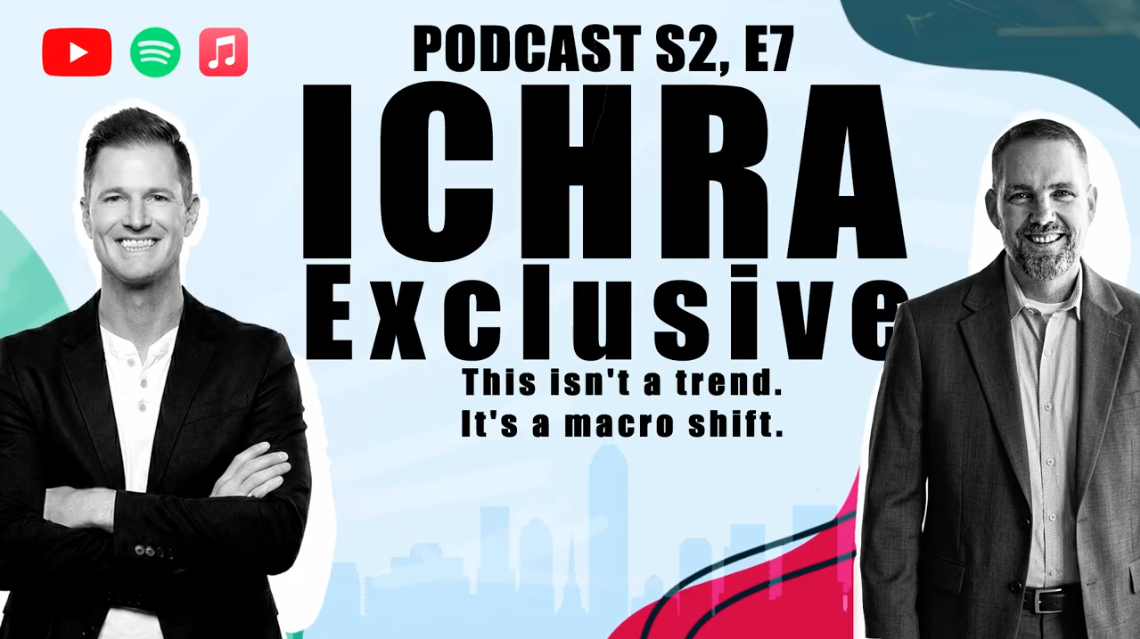
The ICHRA landscape is changing fast, and few people have a better view of what's happening than Lindsay Fisher. As an Employee Benefits Consultant at Higginbotham and a trusted ICHRA advisor supporting one of the largest ICHRA employers in the U.S., Lindsay is helping employers navigate one of the biggest transformations in healthcare benefits.
In this episode of the ICHRA Exclusive Podcast, Lindsay shares what it's like to be a leading ICHRA resource within one of the nation's largest brokerages, how she helps clients identify the right ICHRA administration partners, and what the latest market shifts mean for employers, brokers, and the broader ecosystem. We also dive into the trends she expects to shape the next 12–24 months and the changes she hopes will help ICHRA reach its full potential over the next five years.
Whether you're a broker advising clients, an employer evaluating your healthcare options, or simply interested in the future of employee benefits, this episode offers valuable insights into where the ICHRA market is headed and what organizations should be preparing for today. If you're looking to stay ahead of the changes shaping the future of healthcare benefits, this is a conversation you won't want to miss.
Watch or listen to the ICHRA Exclusive podcast
Episode transcript
Lindsay Fisher: Oh, I'm so glad you asked this question. No, no one's gone back. Nobody's gone back, but they all go into it thinking they're going to go back.
TJ Witham: Today we're joined by Lindsay Fisher, an Employee Benefits Consultant at Higginbotham, who's helping employers rethink healthcare benefits while keeping the human touch at the center of the conversation. With experience across fully insured, self-funded, captives, and ICHRA, Lindsay brings a practical, data-driven approach to building sustainable strategies for employers and employees alike. She currently supports one of the largest ICHRA employer groups in the US, and today we'll be sharing her perspective on where the market's headed and what employers should be thinking about next.
Lindsay, such a treat to have you.
Lindsay Fisher: Thank you so much.
TJ Witham: You came in from beautiful Houston, Texas. And for our listeners or watchers, this is not the normal background. Normally we're in our office, which is a couple of blocks from here, but it's AIM week. So we thought, how can we get Lindsay to come in a day early to record a podcast and have a lot of fun? Super excited to have you today, and I can't wait for you to share your expertise with our listeners.
Lindsay Fisher: Thank you so much for having me. I'm really excited to be here, and I'm really looking forward to all the nerding out we're about to do, so everybody be prepared.
TJ Witham: The ICHRA nerding out is going to be a good game. And Lindsay recently got married, three weeks ago.
Lindsay Fisher: Indeed.
TJ Witham: We've been on multiple calls in the last couple of weeks, so you have, gosh, you've impressed me very much. Your ability to be dynamic, yeah. Congrats again, and so great to have you in Indy.
I wanted to start off with this: you've become the go-to SME at Higginbotham, a really big, still privately owned employee benefits brokerage with a presence in many states, and you've become the SME for ICHRA. What's it like to be the SME at such a big national brokerage and have all the questions come to you every day?
Lindsay Fisher: It's pretty fun, actually. I love talking to all of our consultants. It's been a really interesting evolution. Being in meetings and bringing up ICHRA to some of our newer producers, or people who are new to the industry in general, they're like, oh, you know, grumble, grumble, grumble. And then I'm like, let's talk. So there have been a lot of different consultants I've had tons of great conversations with. They've been open to hearing and understanding more about ICHRA and how we can use it strategically with our clients. It's been really fun to watch everybody become more and more open and add it to their toolbox.
TJ Witham: I'm curious, and tell me if you'd agree. At big brokers like Higginbotham, you're going to have new producers who are young, with a small or nonexistent book, just trying to get out there and build their book of business. And then I almost think ICHRA can sometimes be trickier for the people who have been in the space a long time, sitting on a really big book of business, because ICHRA is just so different. Do you find the conversations internally are different with young, hungry producers versus people who have been in the business for decades?
Lindsay Fisher: I totally agree. I think there was this misperception about ICHRA from a broker perspective, like, oh, we don't get paid on that, so we're going to stay away, when that's obviously not the case. Understanding it a little more, and being able to talk to the more seasoned consultants and brokers about how this can actually help some of their clients, it's something different; it's innovative, and we've got to stay innovative. There are a lot of us out there, so we've got to be able to tell those stories and differentiate ourselves. Once we can have conversations from that standpoint, and also talk through some of the different problems that ICHRA can solve, it starts to become much more of an open discussion. A lot of our newer producers, it's been really cool, because I'll get different emails throughout the week saying, hey, I think ICHRA would be really good for this group I'm talking to; can you send me some information on what's the latest, what's going on, where are your contacts. So it's been a great time.
TJ Witham: I love that. And honestly, in the brokerage world, as an ICHRA administrator, there are more and more of us. There are, last I saw, like 70 ICHRA administrators now.
Lindsay Fisher: Oh my gosh. It's crazy.
TJ Witham: I'm sure if I checked your inbox, you'd have multiple messages right now from different ICHRA administrators trying to get your time. I say that because it's so nice to have an SME with so much experience for the Higginbotham people to go to. Let's be honest, the ICHRA admins are a little biased, and being an SME at Higginbotham, you can be a much more unbiased subject matter expert internally for the producers and account managers to go to.
Lindsay Fisher: Yeah. It's been interesting to watch the market and how saturated it's becoming. Back in 2022 is when my mentor said, Lindsay, I think you need to pay attention to this. As a good mentee, I took that advice, so I've been really on it and trying to stay on it as much as possible. At that time, I only knew of one or two. And then, a couple years later, we went out to RFI, and it was like 12 different platforms. Now we're continuing to see that grow, and it's evolving. There are changes in the market, who's up, who's down, and it's really cool to watch because of how ICHRA is evolving. It's like who can be the most nimble, who is going to be able to solve for the ICHRA issues, and who's going to be the best for different employers.
Right now, we were talking last week with some different consultants at a conference, and everybody's got like five or six that are in their toolbox of ICHRA. Same for me. It really depends on the client, and it depends on their budget. So if you've got somebody really paternal, then Remodel is a great fit, because you've got the high-service touch, which is one of the things I love about y'all, the people piece, because that's really important when people are trying to navigate this. It can be a challenge. And then there are others that are great for technology purposes. The blue-collar folks keep it really simple and straightforward; they have the 213(d) expenses, the marketplace. So there are different groups out there that are different fits for the types of workforces we're working with. It's neat.
TJ Witham: You just literally proved your expertise. I don't have many conversations with consultants who have gotten to the level of maturity where they understand the ecosystem of ICHRA admins and can do that pairing game of really understanding the client deeply and finding the right ICHRA admin. I think most brokers are still a couple notches behind where you're at, where they're maybe placing their first ICHRA and just trying out their first ICHRA admin, and they don't have a ton of that experience or know how to even begin to do that pairing. So I love your ability and the expertise you bring to the podcast, and to Higginbotham, I'm sure you're a blessing to all the other consultants and account managers you work with daily.
So, Lindsay, next question, in a very similar vein. Thinking about understanding ICHRA admins and pairing the right one with each employer based on what's unique to them: are they paternalistic, are their employees going to need more service and hand-holding with people, or do we think their people are more tech-adept and can use a platform? I'm curious, because we've worked together on a large group, one of the largest that we know of in the US, that's been on ICHRA since January of 2023, and evaluated it starting in 2021 or 2022. They initially chose, and we won't name names, a different ICHRA admin, and then moved to Remodel. So I'd love your feedback on when maybe that match isn't the best long term, and how you think about, every year, making sure the ICHRA admin partner is the right fit for groups going into year three, year four, year five renewals.
Lindsay Fisher: The simple answer is not a really cool answer. I think the answer is listening. The biggest part of our roles as consultants, once we have a partner in place with a client, is the management of that partner, making sure we stay really engaged on what's going on, how everybody's interacting, how problems are getting solved, specifically how technology is working, and what the renewal process is like, which obviously we consultants are all very involved in with our partners, because we rely heavily on y'all for that piece. So it's really just evaluating that constantly. Taking all of that in, and if we're reaching a point where this just doesn't feel like the right fit, where we've reached a threshold where we feel we need to make a change, then that's what we'll do.
I've got one more right now that I've also been listening to, and it's an interesting one, because the finance director is in the UK and they run and manage the US operations. So the insurance stuff is really interesting to talk about with him, but he comes from a very practical and reasonable place, and I really appreciate that. He brings up these different issues that are like, oh yeah, that does seem like a problem. So how can we get them to the right partner to solve for those things to better help their population?
TJ Witham: I'm not jealous of you working with that client, because I know UK time zones. Those are probably not fun.
Lindsay Fisher: It's just early mornings, and I'm a morning person, so it works out well.
TJ Witham: You're one of the most flexible people I've ever gotten to work with, so I'm sure you're a blessing to that client. I'm curious; I'd love to double-click into this. You've had large groups on ICHRA for years now. How do you think about renewal? And I don't even know the answer to this, so this is kind of unscripted. Have you had a group go ICHRA and then decide they want to actually go back to a group plan?
Lindsay Fisher: Oh, I'm so glad you asked this question. No, no one's gone back. Nobody's gone back, but they all go into it thinking they're going to go back. So that's been really cool and interesting, honestly. With the large group specifically, it's like, okay, let's just see how this goes, and then let's take a look at group again. There are a lot of challenges when it comes to the specific one we're talking about, as it relates to participation, claims, and adverse selection. So when you think of going back into that group environment, you have to be really mindful of that. Do we want to get into this hamster wheel again? Do you want to get into the claims experience race, where you're just fingers crossed you don't have a giant claim and a huge increase that you're going to have to figure out what to do with? Once you start having those discussions again, and you've also seen that people have made their decisions, there's a nonprofit I have that said, we'll do it for one year. So we sat down, last year was their first renewal, and we looked at group again. Rates were not great. As we know, going into January of 2026, it's been a challenging renewal season on the group side. They saw that people were choosing all different types of plans, and you want to take that away, so we start thinking about that from an optics perspective. They were like, we don't want to take that away. So we just did our best to estimate what the increase is going to be this year, determined what their budget is, and went from there. But nobody's gone back.
TJ Witham: I think that's a question I get all the time from producers who haven't done anything with ICHRA. They think this is a short-term stopgap. I'll be transparent: at Remodel we have 90-plus percent retention, so from an industry standpoint, best in class, because we layer in a lot of people to deliver a good experience. We have groups that leave, and the ones that do leave typically don't leave for another ICHRA admin on our side. They leave and go back to group. But it's very few, way less than brokers think. My thesis is that the first year of ICHRA is so hard.
Lindsay Fisher: Yes.
TJ Witham: All the change management, but also employee education.
Lindsay Fisher: You're doing a 180 in mindset. Your brain, our brains, HR brains, and then the employee brains, have to completely take a different approach. So yeah, it's a hurdle. It's definitely a hurdle.
TJ Witham: But you get through that friction, and then all of a sudden employees get used to this choice. Most employers don't go back to group. They stick with ICHRA because they get through the hardest parts, and then their employees get to reap the fruit of all the choice and all the good things of ICHRA that sometimes don't get appreciated in that first year, just because there's so much change. But you see more and more of that employee satisfaction tick up in year two, year three, year four.
Lindsay Fisher: Agree. Once people get through it, they know the name of the game. Additionally, from an employer perspective and a consultant perspective, now, if you get into that ICHRA space, your medical, your health plan, becomes this machine that's doing its thing. It's set up, you set your budget, you set your allowances, and then we go through open enrollment, people make the choices, and there it is. Then you've got your platform partner to help service those individual policies. So what it does, from what I've experienced so far, is it really creates this opportunity for us to create even more customized programs. What happens is we spend so much time on medical renewals. It's the high-dollar item. You've got to market it, you're negotiating, you're determining your plan designs, what cost containment you need, what about this PBM, okay, the stop-loss market, what does that look like. There are so many different things to consider. They take up a lot of time and energy, rightfully so, and then everything else gets pushed to the wayside. So with ICHRA, it's allowed new opportunities to pop up to enhance the benefit offering based on the population. Do you need mental health services? Let's find a partner for that. Do we need direct primary care? Would that make sense? Are we all locally in one area, and there's a DPC provider we can help fund? We could do that. Virtual primary care. There are so many different things, and the market is evolving so rapidly with these different types of services, that it really allows us to be better partners to our clients and customize the offering.
TJ Witham: I love that. And shameless plug, a couple of episodes ago, actually two episodes ago, we had the Chief Operating Officer of a company called Your Money Line. We're here at AIM, and they do financial literacy and financial benefits for employers, and that's what we were talking about. It frees up time, so you have time to really evaluate whether these different benefits make sense for an employer's population.
Lindsay Fisher: Exactly right. Yeah, I was thinking about Your Money Line, the financial wellness piece. And I know Brian was from Nexus, right, for DPC.
TJ Witham: Yeah, DPC.
Lindsay Fisher: I think it's great that you're having those conversations, because these are really great opportunities to add genuine value. You're not just placing product. It's really understanding your population and what they deal with day to day, because every client's different, so it always depends. The classic insurance answer.
TJ Witham: A lot of times, in a self-funded world, the additional things you layer on, your hands are kind of forced, because you're in the claims game and you need to manage clinical risk and health risk. So a lot of times the budget you have for wellness or those types of things, you get forced into certain types of solutions because you need to manage the risk of yourself on a health plan. So it really does open up a whole new world.
Shifting gears. We've started to see some early announcements of shifts happening in the ICHRA world. We're four or five months into the year so far. What impact do you expect on the overall ICHRA ecosystem as we head into January 1 of 2027?
Lindsay Fisher: I expect, slash hope, that we begin to see some better integrations from a payroll provider perspective, and also from a carrier-to-platform perspective. There are things from the group side and things from the ICHRA side where we need to be able to collide in a way that makes a lot of sense and allows more larger employers to adopt ICHRA. So from a really boring back-end perspective, I'm hopeful for that. I'm also hopeful for the continued legislation, the different bills and tax credits being considered now for businesses. What I do wish with those is that they would be opened up to larger employers, because I think what happens...
TJ Witham: A lot of them are under 50.
Lindsay Fisher: Exactly right. And then it creates this perception that ICHRA is for small employers. I was talking to a consultant on the ben admin side and they're like, oh, well, that's just for small employers. And I'm like, it's not, it's really not. But there are a lot of things out there that kind of point to, yeah, this is a small employer solution.
TJ Witham: Those types of legislation almost create that perception, because it benefits only those employers under 50 in most states. Like Indiana passed it.
Lindsay Fisher: Exactly right.
TJ Witham: First state to pass it, but it's still only for small businesses under 50 to get the tax benefit of offering an ICHRA.
Lindsay Fisher: Exactly. It'd be nice. Let's figure out how to open it up. It's easy for me to say when I'm not the one trying to figure out exactly how to do it, but that would be great if we could find a way.
TJ Witham: Playing armchair quarterback.
Lindsay Fisher: I can say it, but it's much harder to actually do it, I'm sure.
TJ Witham: The last thing I want to riff on for a second is from a carrier standpoint. A week or so ago it was announced that Cigna's pulling out of the ACA market for 2027, which caused a bunch of negative press around ICHRA, because Cigna is very well known, one of the BUCAs, a very well-known brand in insurance. What's interesting to me is I don't think people know the data behind it. Cigna only had roughly a little over a percent of the overall individual ACA enrollment anyway. But the news almost made it sound like 10% or more of the carrier market was pulling out. No, it was actually a little over a percent. Still not great news, but not as bad as the press made it sound.
On a more positive note, I was at dinner last night talking with our Chief Revenue Officer. Individual-only carriers that people haven't heard of as much, like Ambetter or Oscar, so Ambetter's parent company Centene, go look at their quarterly earnings reports and look at what their monthly MLRs are doing. The rate increases we saw happen in 2026 have led to really healthy MLRs, and the stock price of those companies, you're starting to see the positive impact of that, which I think is a really good sign for what hopefully rates will look like as we get closer to 2027.
Lindsay Fisher: Yeah, fingers crossed. Agree on all those things you said. From a group perspective, Aetna's out, Cigna's out, so it's like, well, what's the sustainability for this ICHRA solution? But ICHRA is still growing, so that speaks volumes to the stability of this solution. We've got to do a better job from a group consulting standpoint to create awareness of the Oscars and the Ambetters, because they are doing really great things in the individual market, and they are all in. That is their business. So they are coming up with creative ways to really make it work and make it easy for the consumer, the end user, because healthcare is a mess. It's just a mess to navigate. So if somebody is diabetic and they enroll in one of those very specific Oscar plans, it creates a scenario where they've got easy access, and they're not going to have gaps in care. Whereas if they were on a regular group plan, they're kind of on their own.
TJ Witham: The only way they get that kind of service is if the employer decides to pay for a diabetes disease management vendor to deliver that. So it's on the employer's dime to deliver a very similar experience.
Lindsay Fisher: Exactly right. So it's really neat to see the investments that Oscar and Ambetter are making, really trying to build and develop this market. I hope that continues, and that we create awareness. I wrote down last week that we've got to get Oscar back out, because I was talking to one of the major provider systems we have on Monday. We were talking ICHRA, and she was asking me about Oscar and Ambetter, and she was like, so who are they? And I'm like, you've got to know them. So I think it's important that awareness is created with those guys.
TJ Witham: 100%. That's a huge part of broker education for ICHRA, but also for these employers who decide to go ICHRA. You've got to educate the employees, like, hey, don't write off these carriers you maybe haven't heard of. They actually have really quality insurance and great plans.
Lindsay Fisher: Yeah, because it's like, oh, well, Cigna and Aetna. Oh, you know, no, no, no, it's okay. And we still have Blue, we still have United, they're still in there. People do tend to go with what they know, but once there's more awareness, that's what it's all about, honestly, that visibility and awareness, so people can start to get comfortable making those decisions.
TJ Witham: 100%. One more question, another unscripted one, but I want to ask because your input will be so valuable for our audience. You don't just do ICHRA. We talked about how you've got, I think, five ICHRA groups across four different ICHRA admins, Remodel being one, but you work with others. You're a subject matter expert, but you have self-funded groups, traditional fully insured groups, and a captive. If you picked one, what's another alternative health plan option you're seeing a big uptick in that's not ICHRA?
Lindsay Fisher: Captives are just the hot topic. I think we've all got to be talking about captives no matter what, because they're an interesting solution. In the self-funding environment, looking at TPAs, looking at really truly transparent or fiduciary pharmacy benefit managers, prescriptions have started to make up almost 25 to 30% of total claims. So what are we going to do about that? Finding the right pharmacy benefit manager partner is really important, because how do we mitigate that cost but allow people to have access to their meds? Why is there a cost barrier to that? It's wild. So being able to find really good partners that fit into and solve for those different solutions, the pharmacy piece being top of mind, because I've got a thing going on with that right now that we're heavily exploring strategy on. It's finding the right solutions for the client. So if you go independent TPA, what can you plug in, what can you layer on that the employees can use, that maybe they don't even know they're using? Because if you put in different point solutions, how are they going to know where to go? There are groups that do a great job of actively managing that health plan, and have a central line to get all of that handled and managed, but it is challenging to do and create that environment.
TJ Witham: Yeah. On the pharmacy side, I was talking with Austin Lehman, our CEO, this week. One thing that's interesting for ICHRA, especially for groups, because ICHRA is moving up market. When we look at groups over 100 enrolled that we brought on at Remodel last year, more than half of those came from self-funding. They moved from self-funding to ICHRA. One of the positives of moving to ICHRA, especially since GLP-1s are a hot topic.
One thing employers who were self-funded like about the move to ICHRA is that, in the self-funded world, they actually had to be the bad guys and say, sorry, we're not going to cover that for just any use for the population. If you're self-funded, because you have an employer-sponsored health plan, you make those decisions. So they move to ICHRA, and now the individual carriers that don't cover GLP-1s unless you meet different criteria, the carriers are the bad guys. So the self-funded employers are like, gosh, I'm so glad it's not my choice anymore. I don't want to have to decide this.
Lindsay Fisher: You opened up a can of worms with me on GLP-1s. Are you ready?
TJ Witham: I'm ready.
Lindsay Fisher: This was in my wedding. This is how much we talk about GLP-1s in my life.
TJ Witham: We are ICHRA nerds.
Lindsay Fisher: A little bit, yeah. So with the GLP-1 craze that's been happening over the last few years, we actually did a webinar; I hosted a webinar in partnership with our pharmacy consultants and our population health team. What we did is take a look at, obviously, the cost piece. That's the biggest thing employers have to consider if they're going to add those for weight loss. But there are also other things to think about, right? From a scientific perspective, what side effects are we seeing so far? What other avenues can you take from a population health standpoint? So it was a cool, interesting webinar, but that all came out of conversations we were having with our employers, where they had employees coming to them. They knew they were self-funded, and they're like, well, my doctor said, and you can just say yes.
TJ Witham: You could say yes and process this claim.
Lindsay Fisher: Yeah, just say yes. And so that does create a challenge for the employer, because a majority of employers we interact with want to do right by their employees. I've not met many, if any, who are like, we don't want to take care of them. They're obviously very important to the business, so we want to take care of them. To have to say no to something somebody really wants or believes they need is really difficult. It puts them in a tough spot. And so that optics thing, optics are everything. It's like with the Cigna and Aetna news, optics, and then the GLP-1 thing, optics from a group plan perspective.
One other thing that's been nice to see on the group side, from a strategy perspective, is some of the network strategies we've started to see evolve, which is interesting, because network is a big topic under ICHRA. How do carriers better manage costs by managing their networks better and creating more efficient networks? We're seeing more of that with certain carriers, which has proven beneficial so far.
TJ Witham: Yep, love it. I could talk with you all day. Last question, we ask this to every guest. Think five, ten years in the future. What is one thing, and I'm going to put you on the spot, you have to pick one, that you would love to see in an even more mature ICHRA landscape in the next five to ten years?
Lindsay Fisher: Okay, you're making me pick one, just one. Well, the one that has honestly caused me some challenges with certain situations is the classing and what's allowed from a class perspective. With ICHRA, there's a lot of talk around how flexible it is class-wise. Yes, there is flexibility, but it's not as flexible as people think, or want it to be, or wish it to be. So having more flexibility around what's allowed would be very helpful, especially for those larger employers, to be able to create different contribution structures and allowances to make it make more sense for them. It could just be a more flexible and nimble product.
TJ Witham: I love that. That's great.
Lindsay Fisher: I've got more, but we'll go with that one, because that one's been bothering me lately.
TJ Witham: Well, Lindsay, thank you so much for flying in. You're here for our conference this week, but thanks for flying in a day early and just riffing and talking. It's been great.
Lindsay Fisher: It has been just my treat. Thank you so much.
TJ Witham: Thank you.
Lindsay Fisher: Thanks for having me.
TJ Witham: Before we sign off, we have one quick update for our listeners. We'll be taking a short break during July, but don't worry, we'll be back in August with a brand new episode and more conversations you won't want to miss. And if you've fallen behind on Season 2, this is your chance to catch up. Whether you've missed an episode or want to revisit one of your favorites, July is the perfect time to dive back into the archive. Thank you so much for listening, for sharing our podcast, and for being part of our community. We can't wait to be back with you in August.

.png)
From Strategy to Scale: Gallagher's Secret Sauce for ICHRA in Healthcare

Inside Ambetter: The View From the Carrier Side of CHOICE