By TJ Witham on Jan 7, 2026, 7:00:00 AM
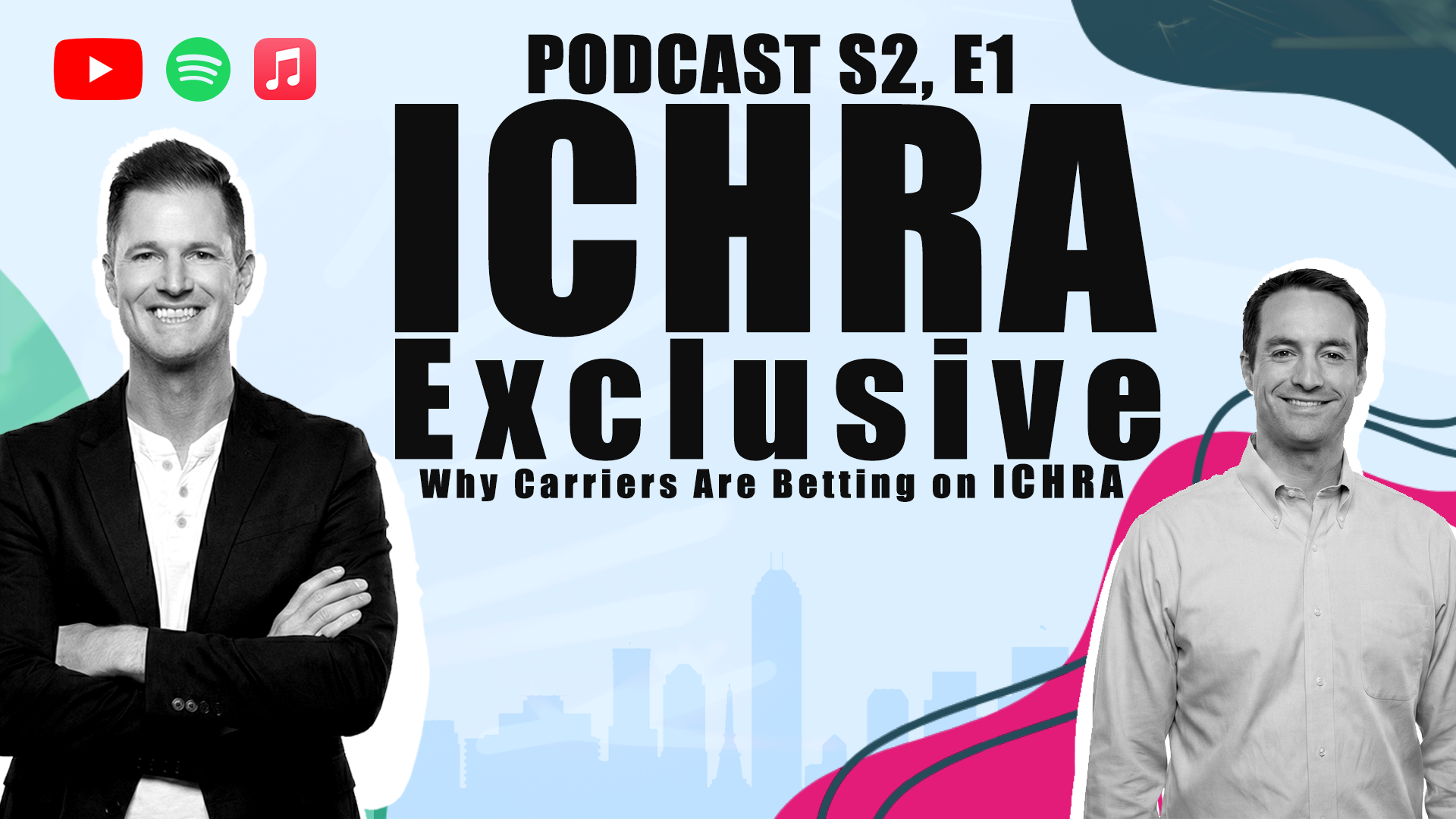
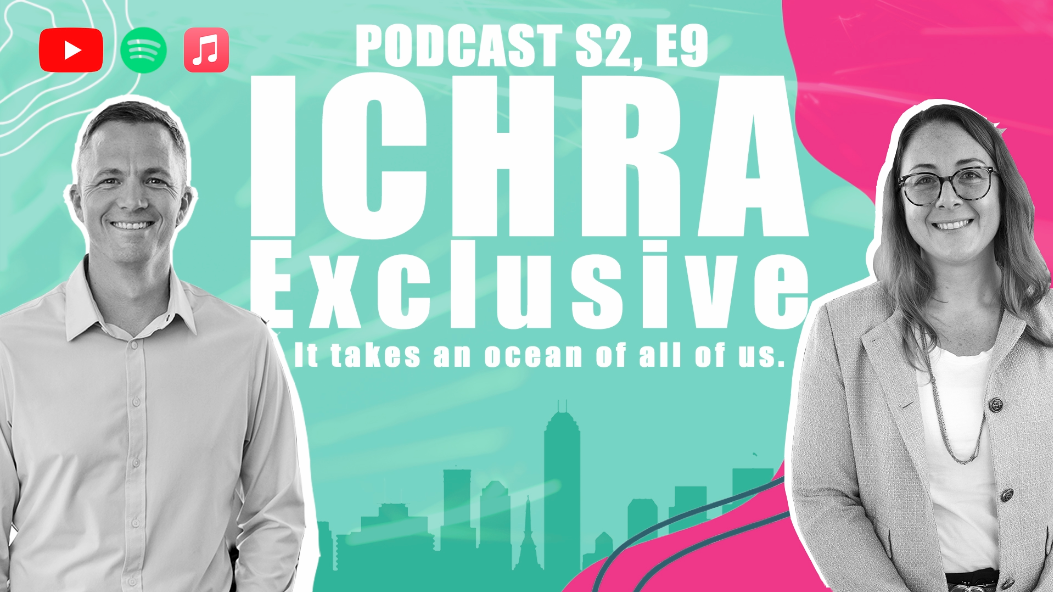
After a year of major growth, the ICHRA Exclusive Podcast is back—and we’re kicking off Season 2 with an honest conversation about what’s actually happening in ICHRA.
In this episode, we’re joined by Bill Williams, former Oscar Health leader and now Head of Product at Remodel Health, to unpack the realities of 2025. With a 20% rate increase—the toughest ICHRA year in the past five—the headlines weren’t pretty. But here’s the truth: even a bad year in ICHRA still outperforms a bad year in traditional group health insurance, where employers regularly face 40–60% renewals after a single rough claims cycle.
We dig into why ICHRA continues to be a viable escape hatch for employers, how carriers like Anthem are now naming plans after the model, and why the long-standing “plumbing” issues are finally being fixed. The conversation has shifted—from questioning whether ICHRA works to focusing on how we make it great.
If you’re navigating rising healthcare costs, evaluating alternatives to group plans, or want a candid look at where ICHRA is headed next, this episode is for you.
Watch or listen to the ICHRA Exclusive podcast
Episode transcript
Bill Williams: Choice is great, right? It can also be very overwhelming. People go to our website and they're like, oh, OOPM and co-pays and deductibles and maxes and limits and HSA, there's all these words. And I know the industry, and I had a bit of a hard time figuring out what exactly everything meant.
TJ Witham: Today we're joined by Bill Williams, the new Head of Product at Remodel Health, but former Senior Product Director of Growth at Oscar Health, to break down exactly why the train wreck days of ICHRA are over, and why major carriers are finally betting their own future within the ICHRA landscape.
Well, welcome back. It has been, gosh, over a year since we've done one of these podcasts, and it's not because at Remodel we haven't been busy, because it's been a crazy good year of growth. If you look back a year ago when we did our last podcast episode, Remodel was sub-100 employees, and we've grown to now greater than 200 employees. We've doubled revenue yet again. We were busy just building over the past year. So welcome back. We're going to make these podcasts way more regular going forward again. So if you listened in the past and you're back again, thank you. If it's your first time listening, also thank you. And we're joined by Bill Williams, a brand new product leader that we've brought on at Remodel Health, and just an industry vet. So we'd love to introduce you, Bill, and have you share a little bit about your background and how you joined Remodel Health.
Bill Williams: Yeah, and I don't know if I'd say I'm an industry vet quite yet. I'm learning a lot from you guys. But it's great to be here.
TJ Witham: I disagree.
Bill Williams: We can agree to disagree. So I am pretty fresh at Remodel. I joined, it's been about two months now, in the thick of open enrollment busy season. So it's been a lot of fun getting to know everybody and understanding how the business works. I joined Remodel from Oscar, which is a carrier focused on the individual market and has made some pretty significant bets on ICHRA, which is how I got to know about the product, the category, got to know Remodel and some other players, including the team at Remodel. And before that, I was on the finance side. I worked at a couple of big banks, so I have some knowledge on the financial, fintech, servicing side, as well as on the carrier side and health insurance. So I think everything led me to this incredible team and role, where I get to blend together all those skills we've put together over a few years. So pretty pumped to be here. It's been awesome so far.
TJ Witham: Yeah, love that. And for those listeners that don't come from the individual health background, like myself, I came from...
Bill Williams: Used to be me.
TJ Witham: The group world. So you came from Oscar. Help us understand, for listeners that maybe are way more familiar on the group side, Oscar's a new carrier name. Help us understand who Oscar is, quickly, the carrier you're coming from.
Bill Williams: Sure, yeah. Oscar could be classified as new. Oscar came into being around the same time the ACA, Affordable Care Act, market was created, back in, I want to say 2012, although I'm a little rusty on that. That's when Oscar was founded. It's been entirely focused on delivering individual plans to individuals and families through this exchange, which, again, is relatively new, very different from group. I think most people are used to the group experience, where once a year you go to some website your employer has, and you have two plans to choose from, you click on through, and it's super simple, you have an allotted amount of benefit, etcetera. The individual market's different. There's a lot more choice involved, you're shopping yourself with a certain amount of money that your employer is giving you. So there is a lot of change, but a lot of benefit, to be able to search and pick the benefits that are right for you. And that's what Oscar was really focused on, because it was newer, and it had its challenges in terms of growing and becoming a legitimate market, which I think we could say now it is.
TJ Witham: Yep, 100%. And it's one of those things too, the more you play in the ICHRA space as a group broker, the more you get to know these carriers that are actually leaders in the individual market that nobody talks about, because they don't necessarily offer... I know Oscar used to offer small group plans for a season.
Bill Williams: I used to work on that. And then they got away from that.
TJ Witham: So Oscar, maybe it's a little bit different, but there are these key carriers in the individual market, like, so fortunate to have you come over from Oscar, because you helped lead the product side at Oscar. But there are others too, like Ambetter/Centene, that only play in the individual market. CareSource would be another one that comes to mind, where they offer individual products in many, many multiple states, that aren't those common household names when you're, as a broker or an employer, thinking about what insurance we're going to offer to my employees.
Bill Williams: Yeah, that's right. And I think the same thing about ICHRA is that it's building off that momentum in the individual market. So as carriers have ramped up their knowledge and their offerings in the individual space, we're now seeing plans and designs and things that are more tailored toward what an ICHRA person would want, which includes a little bit of a different construct than you might see in a normal on-exchange. So I think it's great to see the momentum build from 2012 up to where we are now. And I think carriers like Oscar see it as a major source of growth, if everything comes together as we hope it does over the next few years.
TJ Witham: Yeah, love it. So super excited to have you. I think you're the perfect guest for resurrecting this podcast. I would love to, on the personal side too. So for those who don't know, Remodel's based in Indianapolis, Indiana, a good chunk of our 200-plus employees are in our HQ office in Indy. Bill's actually a remote employee. So help us get to know you a little bit on the personal side.
Bill Williams: I live in Brooklyn, New York, been there for many years. My family's there, my wife, we have four kids. Oscar was based in New York, so the change to Indianapolis was a pretty big decision. I love being out here. The team is very in-office, very collaborative, really productive because of that. So I try to get out here a couple of times a month so I can be here with the team. So it's a lot of travel for me, but also pretty energizing and pretty fun to be out here. My wife and I love the city, so it's hard for us to entertain moving. We love taking advantage of all that it has to offer. But I also like being here, a lot of good sports teams, good food, good people.
TJ Witham: So real quick, we'll go down that route for just a second. So Mets or Yankees?
Bill Williams: Yankees.
TJ Witham: Okay. Giants or Jets?
Bill Williams: Giants, the typical link.
TJ Witham: Okay. And then, I guess, sadly, just the Knicks?
Bill Williams: The Knicks, yeah, but I'm actually becoming more of a Nets fan. The Nets are based in Brooklyn, we can walk there.
TJ Witham: That's right.
Bill Williams: They're not quite as competitive as the Knicks, but the Knicks are fun to go watch. But our kids are coming Nets fans, they like the Nets. And the Liberty, not to forget the WNBA.
TJ Witham: Yeah.
Bill Williams: The Liberty's a strong team.
TJ Witham: That's awesome, man.
So, Bill, in our family, the Witham house, I always argue with my wife, do you take good news or bad news first? I always say give me the bad first, and then end with the good. So that's what we're going to do today. We're almost to the end of 2025, we're doing this episode, it's like almost mid-December, so we're a couple weeks away from the end of the year, etcetera. As we think about 2025 coming to an end, I would argue that, if you're in the ICHRA landscape, the bad news of the year was, for the first time in really five or six years, the average rate increase was significantly higher than what we've seen since 2019, 2020, where the average nationally was in that 7 to 10% range for the last five years. And in 2025, we're looking at an average national rate increase that's a little bit north of 20%. So, question for you, what are your thoughts around the rate increase we saw in 2025, and your thoughts on that as we look toward the future?
Bill Williams: Yeah, I agree. I think it was pretty tough. Having come from Oscar, we were preparing for significant rate increases. It impacts every element of your business, and it impacts people. I think that's really the hardest thing, as a team who serves and really wants to make this experience great for people, seeing these crazy rate hikes is a tough thing to go through. So I think this was a challenging year. We prepared as much as we could. I know at Remodel we did, in terms of having a lot of support for people and helping them through the shopping experience, and working with businesses to understand the numbers. I think typically we see groups primarily coming to drive some savings on their health insurance benefits, and the savings just weren't as large this year. So I think it was hard in many ways, and we did the best we could with helping guide people through that process. Our hope is this was the reset year, and I think we'd all lock arms and say we really hope that 2026 has some stabilization on the rate side, so we can really focus on how to improve the experiences, and not as much on the rate problems that we saw this year, and expand access to care, because that's what we really want to do. So that's the hope for next year.
TJ Witham: Yep, I agree with that. I think too, I'm going to go down a little rabbit trail. I talk to group brokers and employer leaders all the time, and especially, like, a 20% rate increase in a year, never a good thing. But what's crazy to me, coming from my background, which was more on the self-funded side of the house, if you're a 200-person employer and you have a terrible claims year, it's not crazy to get a 40, 50, 60% renewal on your stop loss. So I still think, from a general stability standpoint, especially if you're a small to mid-market employer, a bad year in ICHRA is still not near as bad as what a bad year on a traditional experience-rated group plan can be.
Bill Williams: Entirely. I mean, groups still have control, to some extent, over their cost structure, which, you can't say the same about that in group. So I think that is a huge benefit of the ICHRA market in the shift there.
TJ Witham: Yeah, 100%. So I'd say that, as we think about some of the bad news of 2025, that would take the cake, top for me. Transitioning to more of the good news. I think two of the things we were talking about just this week are, you're starting to see the carriers actually release more ICHRA-specific plans off-exchange. So two that come top of mind, you've got Oscar doing some really innovative things with ICHRA-specific plans, and Anthem, in a handful of states, released off-exchange plans that literally have ICHRA in the name, with unique networks for those ICHRA plans in many of these states. So seeing the carriers really start to lean in. I guess my question for you is, how encouraging should that be for the longevity of, hey, ICHRA's here to stay, with the carriers leaning in?
Bill Williams: Yeah, I think it's really, really encouraging. Again, back to my experience at Oscar, I helped work on, with the team, a really innovative partnership with a retailer in the Midwest. Phenomenal brand, really focused on serving people, and offering ICHRA to businesses in the area, and eventually, hopefully, to their own employee base. So I think we're seeing a lot of interest, a lot of opportunity for it. I think carriers are taking notice, but it's a different product. So it does take time. Carriers have to evaluate the differences between the on exchange market, the group market, and what ICHRA looks like, and make changes. And insurance is a little slow, it's an annual process, you're redesigning and evaluating your data, and you're trying to then create something that's the best fit for the people you're serving. And I think it'll take a few years, but we're on our way to having, I would think, benefits that are closing the gap on the difference between group and individual as it stands today, and hopefully making it a richer and better experience in the future for individuals. So I think you see that trend happening.
TJ Witham: I love that. I think too, some of the collaboration that's encouraged me the most this year as a leading ICHRA administrator, the carriers came to us early to mid-year in 2025, and they said, hey, what could we do to offer different off exchange plans that mirror the most common plans we know people want on the group chassis? I mean, we saw the carriers, many of our best carrier partners ever at Remodel, truly release plans that were literally exactly what we told them in early spring of 2025. We saw the plans get released, and man, you're seeing lower out-of-pockets, some new HSA silver plans that are coming out in key areas of the country. It's been fun to see the carriers listen to the ICHRA admins, because we're really close to the experts, the brokers and the groups, and what the employees want.
Bill Williams: Yeah, completely. So I think it's been a great collaboration as well.
TJ Witham: Obviously you felt encouraged enough to come now work for an ICHRA administrator, coming from an ICHRA focus on the carrier side. I'd love to hear, personally, what that moment was for you, to make the jump from the carrier side to the ICHRA administration side.
Bill Williams: Yeah. I had a really great experience working at Oscar, and it's been a good portion of my last two years thinking about the ICHRA market. We saw it as a pretty big growth opportunity, and I saw the challenges with it. It's a great product, we believe in the future of it, but it is difficult to deliver today. There are many ways that the member experience is not ideal. It can be challenging for groups to shift over. We were really working on solving those problems, and I was really excited by what I saw all the ICHRA platforms that were up and coming doing to try to solve that problem and make this a better and more compelling opportunity. So when I was there, I worked with all the different ICHRA admins that have emerged and are doing really well, and saw the momentum. And I just thought it would be a really great next step for me, if I could take the skills and the knowledge I learned and try to really tackle that user, that member, that group problem, to help ICHRA, not only for Remodel, but for the entire industry, be as successful as possible. And I think it's a really compelling and interesting mission to be on.
TJ Witham: So we're so excited to have you leading the product side at Remodel. Really eager to see what, and you've already done great work here a couple months in, what that great work will continue to look like, which I think will be a blessing and benefit to partners, employers, the end employees, as Remodel continues to innovate and add to the solution. Because, yeah, you're exactly right, moving to ICHRA from a group plan is major change, and there's friction. I tell brokers that I work with all day, even leaders at the employer level, all the time, if you're going to move to ICHRA and you don't expect some bumps, you've got bad expectations, because there are going to be bumps.
Bill Williams: It's different.
TJ Witham: And you've got to work with a partner that knows how to help you navigate those bumps when they pop up. And we believe at Remodel that's best done with leading technology and people, and you can't take either one of those out of the equation. It's got to be best-in-class tech with really experienced, good, empathetic people, to help navigate those bumps of moving from group to ICHRA.
Bill Williams: Yeah, I completely agree. And if I think about, a little, why Remodel, and why am I here? I think Remodel, I saw a couple of things that really excited me. Number one, the sales and distribution team is the best in the industry. And having worked at Oscar, and spent a lot of my time thinking about agencies and brokers in my prior role at Oscar, I know how challenging and how long it is to build those relationships and build the trust. So I think that's a key cornerstone that I was really excited about. And the second is the service. I mean, these are really hard problems, and you can solve them technically, we are getting there, but really by taking great care of our clients and our members. And Remodel has built probably the best operating model out there for taking care of people and making this really challenging experience as smooth as possible. And I think having those two focus areas clears the way for someone like me to then come in, take credit for all the great work you've done, but really then rip apart the remaining pieces and say, how can we level up the great progress you've already made with our product? And if I peeled it back a little bit, what am I most excited about? I love building deep empathy for the people that we're impacting. So I'm very excited to dive even deeper into, how do you really feel when you're shopping? What are the challenges? How do groups feel? What is that admin that has to change from this very seamless group experience, to now they're managing all these other workflows for individual policies? What can we do to make that as easy as possible, and make it as delightful, and as great as the group experience? And as a product person, that's cool, tons of opportunity for that.
TJ Witham: I think, sitting, I'm here, we're near the end of the OE, and I'm being honest with you, I'm always getting tired by this time of the year. I'm like, man, I'm ready for Christmas cookies, a lot of time to take some time off. But one of my favorite things about OE at Remodel is I still get the chance to go on site and meet with employees that want to meet with a human being. They appreciate our technology, but it's a big change. They've never had access to 70, 80, 90 different plans that are available to them now through the ICHRA model. But they want to meet with a person, and they want to ask their questions, and feel like they've got an expert that can help navigate through the anxiety that a change like this can cause for many people. So that marriage of people and tech is just, man, you can't beat it. You can't cater to all personality types with one option. You've got to have best-in-class tech, because there are many people that want to make that decision by themselves, they're confident in their understanding of insurance, they just want good shopping or evaluation-type technology, to be able to see what plans exist, are my doctors covered, answer those questions themselves, and then they're comfortable picking a plan. Versus there's a lot of people on the total opposite side of that coin, that, man, technology is not their thing, they want to meet with a person. So I love, I'm tired, but I love getting on site and meeting with employees at some of these larger orgs we've been able to bring on board this year. So I'm super excited at the continued work your team's going to be able to do to even make our shopping and enrollment process better and better as ICHRA continues to mature.
Bill Williams: Yeah, I mean, nothing beats sitting next to the person using your tools and your tech, and really building an understanding of what they're going through, because you get used to it, you don't understand the friction in the way that they do. And I think the fact that Remodel has built this strong advisement team, which is the best in the industry at helping people navigate this, it's something that's really hard to get to and to build up. And I think people might wonder, why do you need that? Like, in the group experience, you have two plans, I don't think you're calling anybody, maybe some people do, I never even thought about it. But on one hand is choice. Choice is great, right? It's great to choose, you can pick the plan that best meets your needs, there are many better things. But it can also be very overwhelming. And there are probably a lot of people who have no experience in actually going out and selecting different elements of their benefits. And they go to our website, and they're like, oh, OOPM and co-pays and deductibles and maxes and limits and HSA, there's all these words. And I think the great thing about having our advisement team is, it's overwhelming for people, and we can help make that as understandable and as simple as possible, so they feel confident in their choice. I don't know if you remember, I did it for the first time here at Remodel this fall, and I know the industry, and I had a bit of a hard time figuring out what exactly everything meant. And it's challenging, it's a big switch and a big change. So the most we can do to help, we started with people and having incredible advisors, and now what we hope is to create a tech experience around that that makes it super easy, and makes them feel confident, and like they made a great decision. I think that's the goal.
TJ Witham: We're coming up on, gosh, ICHRA was legislated, what, late 2019, went into effect 2020. So we're coming into the start of what will be the sixth year that this has been a thing, the start of the sixth year. What I find fascinating is, I still come across many either brokers or employers that were the early adopters of ICHRA, and they moved, oh man, brave souls, they moved in 2020, 2021, 2022, when ICHRA admins were just starting to figure this thing out. And, as a random side note, one of the biggest differentiators at Remodel is, for those who don't know our company story, our company started in 2015. So we were actually doing a product very similar to ICHRA starting ten years ago, where we would help groups move from a traditional group health plan to giving their employees, at that time we called it our Wage Plus product, which was a post-tax stipend, but a very similar model, in giving dollars, and then employees had choice of individual plans, and then we worked to help administer that and make it look and feel as much like a group plan as possible. So I love that Remodel had a five-year head start on most of the other ICHRA admins, in that legacy product. So then it took us time, though, even to figure out, because ICHRA was a little different, had to figure out the intricacies of how to make our solution fit the mold of ICHRA, pre-tax, all the things that are a little bit different from the legacy product. But when I think about, I talk with these employers that went ICHRA in 2021, 2022, or brokers that placed the case, and it was like, man, for lack of a better word, it was a train wreck. And many of them maybe pulled back and went back to a traditional group plan. I talk to brokers all the time that they placed an early ICHRA with an administrator that unfortunately struggled, and now it's like ICHRA's on a blacklist, and they're not super open to placing ICHRA business anymore, regardless of who the partner is. So what I'd love to ask you, Bill, is, ICHRA maturity has come a long way from those early years. We're still in the early adopter phase, but I think we've come a long way. Talk to us about some of the infrastructure changes that Remodel's made, and some of the problems that we can solve now at scale, based upon some of those investments we've made in how we do different processes in the ICHRA landscape.
Bill Williams: Yeah. I think if we start from the perspective of, you're an HR executive, or an executive at a company who is planning on switching benefits, they want to make sure that their employees have a consistently good experience, on par with what they just went through. And I think the challenge with ICHRA, as we've talked about, is this notion of choice, and the fact that, right, you take a 1,000-life group who is national, they're going to have employees all over the place, Colorado, California, Texas, and each of those regions could have different carriers. So the complexity that we're seeing is, you're not connecting with one carrier, or two, like big groups might, you're seeing 30 for a group, and making sure that the enrollments are facilitated and that people get access to care on day one is really challenging. And if left to their own devices, it would be really challenging for a group or an employee to figure that out. So in the early days, I think the problem was all those enrollment processes were very manual. The ICHRA platform exists because there are funds coming from the employer, we need to make sure those funds are given to the employee, but they need to pay the premium. And that flow is what an ICHRA platform like Remodel ensures happens end to end. So you think about that, you're making sure you're paying policies for every single state, all these different carriers. It is incredibly challenging. I think in the early days there were plenty of problems with facilitating the enrollment process in spreadsheets.
TJ Witham: Oh man, I think back, this is a true story, like literally just last year, I was sitting in central PA, and I was with a carrier, and the carrier had one local broker in central PA that was trying to self-administer ICHRA at the brokerage. And they would bring into the carrier a spreadsheet every month with the premium payments they wanted to apply to each of the individual plans. They'd deliver it in a spreadsheet once a month. They would literally go in and say, okay, here's my spreadsheet, let's go make sure these are correct. That was just like a year ago.
Bill Williams: Right. That was not long ago.
TJ Witham: Nope.
Bill Williams: You know, and I think you mentioned the other... So if I could reframe this a little bit, I'd say two of the operational challenges we're seeing, number one are the enrollments, number two are the payments. So back to the enrollments element of this, what Remodel has done, what many others are doing, but I think we're pretty far ahead, is integrating with these different carriers to facilitate the ease of these transactions. Because without that, you're applying lots of people, lots of process, that could be mistakes, and the worst thing that can happen is a lapse in coverage, or someone can't get to a doctor when they're supposed to and they need to. So I think that's one important part that has come a long way. The second part is the payment side. So it's one thing to facilitate the application to enroll someone, but then actually passing the funds along is also very complicated. And being able to execute those payments, because each carrier might have a different process, some accept auto pay, some accept only ACH, some you can do in an automated fashion, some you have to go to their broker portal and key it in. Every single one could be different. So the other area that Remodel has really focused on is building out a payment infrastructure that helps our ops team stay on top of that. Did we pay the binder? Are we monitoring every month's payment? Did auto pay fail? Why? Because someone needs to look after that, and it's a huge burden if the group admin had to do that. So Remodel spent a lot of time building that infrastructure out. So I think the combination of the automated enrollments and the automated payments, to the extent we can, with some great tools for our team to stay on top of, just provides a lot more assuredness and confidence to the group and the broker, hopefully, that we're taking care of this, and it feels seamless, and all those bumps hopefully start to go away.
TJ Witham: I love that. I tell partners I work with all the time, Remodel does the, you can say it a lot of different ways, you call it the unsexy stuff, I call it sometimes the essential plumbing. Those things that have to happen, and if they don't happen consistently, can become fire drills really quick, like the premium payments, accuracy of enrollments. Our ability to do those things so well across hundreds of carriers nationally, where the processes are slightly different for each one, that's what I continue to be so impressed with, our team and the processes and the technology we've built, that just do those things so consistently. And then what I'm also excited about is the more sexy stuff that you talked about earlier, there's more of that, okay, how do we improve decision support, and what's that member shopping experience, and those other things that also matter. But I encourage my broker consulting partners, or leaders at the employer level, don't forget, when you're evaluating an ICHRA administrator, you've got to evaluate the unsexy essential plumbing stuff just as much. But it's not the stuff that, when you're on LinkedIn, or you're listening to podcasts, is shared or talked about all that much, because it's not quite as flashy.
Bill Williams: Yeah, no, I agree. There's not as many people talking about payroll integrations as there are the shopping experience, so I get it. But that's what's great about Remodel, a lot of the time has been differentially spent in building out the pipes and building out the underpinning, so that we can now really focus on leveling up all the experiential elements that we offer, to match our service and sales. So I think that's what 2026 will be focused on.
TJ Witham: Yep. Yeah. But I'll just tie a bow on 2025. We're starting to review revenue data, and we had a really great year. I mentioned we grew by more than double again this year in revenue, an awesome growth year. A good amount of our revenue, from a growth standpoint this year, we're actually groups that didn't pull the plug on ICHRA. They chose an ICHRA administrator that struggled, many times on the essential plumbing type items we just talked about, enrollments, payments. They didn't say we're done with ICHRA, we're going back to a group plan. They stayed the ICHRA course, but they just found Remodel Health as their new ICHRA administration partner, a partner they believe can do those types of things that matter deeply to deliver a good employee experience, do them better.
Bill Williams: Yep.
TJ Witham: So I continue to be, yeah, really excited about even just that type of business, of early adopters of ICHRA that maybe are just looking for a different home, to help do some of those details even just a little bit better.
Bill Williams: Yeah, same. That's awesome. Great story.
TJ Witham: Bill, I just want to say thanks, man. This has been awesome. Really enjoyed the time today. Great to have you in Indy.
Bill Williams: Great to be here. Thank you.
TJ Witham: You've been an absolutely awesome guest. And if you're a listener, two good things you could take away or do next. First would be, if you want to learn more about ICHRA in general, we've invested in ichraacademy.com, go there. You can actually register to get certified in ICHRA, and there's a lot of really good ICHRA educational content in a digital landscape that you can work through on your own time. If you're not a new ICHRA learner, you're a little bit more sophisticated, I'd encourage you, if you've got a specific customer, as a broker, or if you are an employer HR leader or business leader, and you want to look at Remodel Health potentially as an ICHRA partner, just send a simple email to hello@remodelhealth.com, and we'd love to take you on the next steps of what it could look like to evaluate Remodel Health as an ICHRA partner. But thanks so much, really enjoyed it, and thanks again, Bill.

The Missing Piece in ICHRA: Financial Wellness
Inside Ambetter: The View From the Carrier Side of CHOICE