By TJ Witham on Feb 13, 2026, 7:15:00 AM
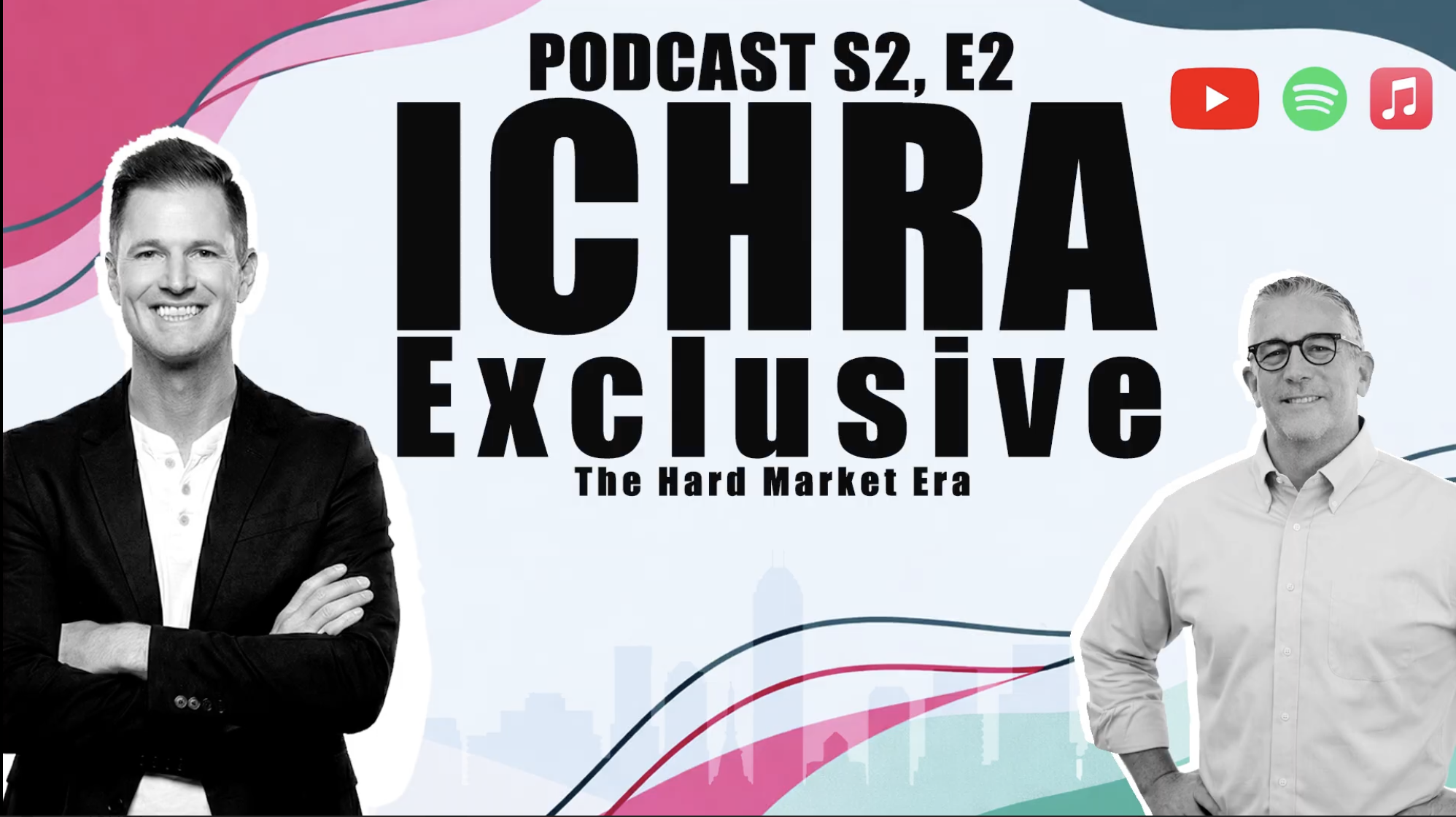
The ICHRA Exclusive Podcast is back for another episode—and we’re diving straight into the "Hard Market Era" of 2026.
In this episode, we’re joined by Paul Ashley, Vice President and Consultant of Corporate Benefits at NFP, to discuss why the traditional renewal cycle is becoming an unsustainable burden for employers. If you’re an employer waiting for your 2027 renewal to hit your desk, the headlines may not be pretty. But here’s the reality: in a market this "hard," having a viable escape hatch like ICHRA isn't just an option—it’s a necessity.
We dig into what’s keeping NFP “edgy” in this environment, from Captives and MEWAs to Reference-Based Pricing. Paul breaks down why ICHRA is a "multiplier" for 2026 as we head toward a massive million-life milestone. We also explore how carriers like Anthem are evolving, creating separate ICHRA specific plans.
The conversation has shifted from simply seeking a risk solution to mastering Change Management. Moving a population to ICHRA is a 180-degree turn that requires understanding and bi-directional feedback. We discuss the human hurdles of this transition—from the emotional journey of Medicare-eligible employees to the geographic complexities of multi-state populations.
If you’re navigating the "warm-up act" of rising renewals, evaluating alternatives like Association Health Plans, or want a candid look at the rapid adoption of ICHRA, this episode is for you.
Watch or listen to the ICHRA Exclusive podcast
Episode transcript
Paul Ashley: Well, news flash: the healthcare system is broken, full stop. And obviously the financing of that, which happens with health insurance, either fully insured or self-funded, is also struggling. As we headed into 2026, the year we're in now, it's a pretty hard market.
TJ Witham: We're heading into a massive year for ICHRA, and today we're joined by Paul Ashley, who's the VP and Consultant of Corporate Benefits at NFP and a fellow podcaster. If you're an employer just waiting to see what your 2027 health plan increase is going to be, it may not be a pleasant surprise. A hard market is here, and you need alternatives now.
Good morning. On this blistery day in Indianapolis.
Paul Ashley: The air is crisp and clear and dry.
TJ Witham: I'll introduce you, and you fill in where I miss, but Paul Ashley, a leader with NFP's Indy office.
Paul Ashley: That's right.
TJ Witham: And you've been in the benefits consulting space for as long as I've been.
Paul Ashley: Almost a quarter of a century. That's how old I am.
TJ Witham: How experienced you are. Well, I really want to start with, obviously, a crazy year within the health insurance world, both on the group side and in the individual market, with rate increases and general news from a carrier perspective. So there's no shortage of problems to solve as a benefits consultant, which I think is good job security. But I'd love to hear, we were chatting in advance of this podcast, what keeps NFP edgy, and some of the alternative solutions that are top of mind for you and your team, as employers out there are really looking for potential solutions when the health insurance market has just been a challenging market.
Paul Ashley: Yeah, well, news flash, the healthcare system is broken, full stop. And obviously the financing of that, which happens with health insurance, either fully insured or self-funded, is also struggling. And you said it best when you talked about, as we headed into 2026, the year we're in now, it's a pretty hard market. And that can be hard, from fully insured premiums on the fully insured group side to stop-loss market access for self-funded plans, where the insured acts as their own insurance company and buys the financial protection of stop-loss. Those markets are hard right now. And I have a pit in my gut. I see it from NFP's actuaries, how they're helping us project, and our financial analysis. As bad as we thought 2026 was- and it was bad- I feel like we should buckle our seatbelts; the 2027 renewals might be a little bit worse. So with our clients, there's no shortage of problems to solve when it comes to that and total rewards. And we're working to push our clients- push is not the right word, but expose our clients to the spectrum of solutions. There are lots of alternative models they maybe haven't thought about before, but now they kind of have to be more open to it. Our job as advisors is to educate them on all possible pathways, and then help them eliminate or winnow down to the pathways that might make the most sense for them.
ICHRA is a good example. We have to tell all our clients about ICHRA, of all sizes. And historically, folks would say ICHRA was a down-market solution, only for small businesses or nonprofits. Sure, it's for them, but the growth has come up-market. Hundreds, if not thousands, of lives of employee size, employers are exploring and implementing ICHRA. And that's a change. Why is that a change? Because the market is so hard, and they have to look at alternative models.
TJ Witham: It's also crazy; in my perspective, I've been selling ICHRA now for two years. When a small business evaluates ICHRA, it's so different than when a mid-size or large group evaluates ICHRA. Because a small employer, say 20 to 25 people on a health plan, they're evaluating ICHRA and looking person by person: who's going to be impacted on this change to ICHRA, what choice are they going to have, what would average premiums be with the individual market plans being age-rated. That actually is very much a person-by-person decision that many times a CEO, or whoever's leading the HR function, will go through. Versus, as ICHRA shifted up-market, the more of the multi-hundred, like our largest clients, we've got 4,500 eligibles that we serve now, it's such a different evaluation, where you're not doing it person by person. You've got...
Paul Ashley: You can't.
TJ Witham: Employees scattered in many, many states. So it's just such a different type of evaluation. So it's a fun thing for me to be in and see the ICHRA market start to mature. I think we're in the maturing process. It's not mature in any way, but...
Paul Ashley: Yeah, I was telling somebody earlier that it used to be in its infancy, and now it's enrolled in kindergarten. ICHRA is a kindergartner getting its legs underneath it, getting some assignments. It's stabilized but still maturing. It's a not-yet-mature market, unfortunately, but also opportunity exists there.
TJ Witham: I think so. Let's drill down on this topic before we shift gears. So it's definitely an alternative type solution. What are some of the other alternative solutions that you're seeing as good options for groups when they've got to look at something different than a traditional fully insured or self-funded plan?
Paul Ashley: Yeah. So a lot of folks are shifting out of fully insured into self-funding, so for them that would be an alternative model. And then within that self-funding world, there's a whole thing that opens up wide to you. You could be part of a captive, to place your stop loss with other like-minded employers; that's an alternative way to do stop loss. You could go direct to the market. You could do things around cost containment that you simply can't do on the fully insured side, like specialty Rx cost containment, because some of the biggest growth in healthcare spend for plans is because of Rx. It used to be that Rx would make up 15, maybe 20% of the claims cost, fully insured or self-funded. Now you're starting to see it be 25, 30, 40, 50%, and growing. And it's amazing, because some of the solutions we now have to cure and treat diseases that didn't exist years ago are awesome, at a very expensive price. So what are ways you can bend that cost curve on the fastest-growing part of claims, which is Rx? You see a lot of alternative models there.
You also see reference-based pricing, which is something you can really only do in the self-funded world. It's essentially where you decide, we don't have a network in the classic sense; we're not using the BUCAs, right- Blue Cross, Cigna, Aetna, United- we're not using those big national networks, or even a local network. We're basically saying, as a self-funded plan, we reimburse at the Medicare level plus some percentage. And what that does is it cuts the net claims paid down by 20 to 50%. The challenge it creates is that those providers folks are going to have not agreed to accept that as payment in full, so there can be a balance bill situation. So folks talk about ICHRA being disruptive, and it is; it's a change of model. You also have the other end of the spectrum, where you're still offering a group plan, it's self-funded, and you're using reference-based pricing. Well, that's disruptive too. So which disruption are you willing to wrestle with? Some would argue RBP's better...
TJ Witham: Yep.
Paul Ashley: ...some would argue ICHRA's better in terms of least disruption. And both are right, and both are wrong. It just depends on who you are and what solution you want to put in place.
TJ Witham: The illustration I love to use, as I meet with consultants like yourself, but also get access to CFOs and CHROs that are evaluating this change to ICHRA, many times ICHRA can drive good financial savings, for sure. But it's almost just like, we're in January, I'm still very focused on my New Year's resolution, which is...
Paul Ashley: You haven't given it up yet.
TJ Witham: Health focus. I'm not giving it up yet.
Paul Ashley: One month in, and you've still got it.
TJ Witham: I'm working toward some weight loss goals myself, just managing what I eat and working out. But it's very similar. I can't expect change, or to get different results, if I don't drive changes. And I think any of the alternative solutions are very much like that. If you want to lose 10 pounds, you've got to change the way you eat; you've got to be better at working out. There are changes you have to make. Same thing is true if you're a health plan and you need to save 10, 15, 20%. There's going to be some give and take there. And if you find good partners, there are good reference-based pricing vendors out there...
Paul Ashley: There are also bad ones.
TJ Witham: There's bad ones. I like to think Remodel's a good ICHRA administrator, and there's other good ones. You've got to be paired with partners that can help you navigate that change, which we'll get into here in a bit, and talk through some of the friction that moving to an alternative model can cause to get some of the reward that these employers are going after.
Paul Ashley: Well, one, and this circles back to the thing you said about larger employers and the way they analyze ICHRA, it just has to be different, because of scale. The thing I didn't expect, right? Duh, me being 25 years in the industry, I'm still learning. And if you're not learning, you probably should get out of whatever industry you're in. By the way, pro tip.
TJ Witham: My wife challenges me every day. She says...
Paul Ashley: What did you learn today?
TJ Witham: Have you used ChatGPT today? That's her question. She's like, there are so many things in your job you should be using it for.
Paul Ashley: Absolutely.
TJ Witham: That's a great challenge.
Paul Ashley: That's a good one. The thing I didn't expect with larger employers is, especially if they're multi-site, multi-state. One of the challenges large employers have when they offer a group self-funded or group fully insured plan is they generally are choosing one network, and it's one of the BUCAs again, right? It's a national network: UnitedHealthcare Choice Plus, Blue Cross Blue Shield, Cigna, whatever makes sense. Sometimes, if they're large enough, they can do a patchwork of regional networks, but you have to go way up-market, 5,000 to 10,000-plus. What I didn't realize is ICHRA solves a problem of, we've chosen X national network, but in this state they hate it, and in this state they love it, and in this state they hate it, and in this state they love it. ICHRA solves for that and says, great, we're going to put the choice of the network back in your hands, not at the individual office level, but at the consumer level. You like Blue Cross Blue Shield? Go for it. You like Ambetter? Go for it. You like Oscar? Go for it. That choice architecture just explodes to be open, and it takes the pain out of, we chose X national network, and you hate it. That is now your choice. And it's sort of a dumb moment; I'm like, oh yeah, that solves that problem. Now, there are other downstream consequences you have to work through, but that's a huge reason a larger multi-state employer might want to choose ICHRA, because they're not quite large enough to do multiple networks. You have to be pretty big to do that. If you're 200 to 5,000, demanding that is tough. The ICHRA lets you get it.
TJ Witham: Yep. My favorite example of what you just described is more regional carrier-specific, but we've served a lot of groups over the years that were fully insured with Kaiser. Kaiser out West- in Oregon, Washington, Colorado; they've got Georgia as well, and California, so they're in more than just out West. But an employer that's fully insured with a Kaiser, what we find most times is Kaiser's a traditional, more HMO-style plan. Like 80% of the employees love it, they're totally fine with Kaiser fully insured. But the other 20% hate that it's been, hey, Kaiser's the option. So it becomes this magic solve for employers that are multi-hundred, that aren't big enough to go get multiple networks, that have offered maybe just a Kaiser fully insured plan for years and years. When that fully insured plan, when cost becomes a challenge, all of a sudden ICHRA is a magic solve, because Kaiser also has individual plans. So that same Kaiser network and plan that 80% of people have loved, they can still have access to that. But then all the other carriers that people have wanted, like out West, nerd out for a second, PacificSource and Regence, and some of those carriers that people who live out in that area have wanted, they now have access to the other carriers for the first time. So the true choice in that scenario, for those larger employers that aren't large enough to do what you said, it really does open up a totally new world for employees.
Paul Ashley: Yeah. That's one of those, if an employer's thinking about, well, is this for me? If you've heard that feedback, I don't like the network because I'm in X state, this could be another reason to explore ICHRA, other than just cost containment. Choice architecture then becomes part of why you might do it. So we're constantly listening to our clients about what problems they're trying to solve, and then our job is to be experts on the pathways and help match that, and help them either focus on or eliminate what solution might make sense. And back on the group side, another alternative solution is doing more narrow, high-performance networks. You mentioned Kaiser; that's kind of how they've contained costs on the West Coast. Kaiser is predominant. You can say Kaiser's good or bad, but it does solve the problem, which is trying to direct people to high-quality, lower-cost healthcare. When it works, it works. If it doesn't, it doesn't. It just depends on what you want to do. Now, in the Midwest, where you and I are sitting, the idea of a narrow network has been rejected a little bit. But I do feel like that's back on the table, with these cost containment needs folks have on the group side, to look at higher-performing, more narrow networks. In the state of Indiana, if you have Anthem Blue Cross Blue Shield or United, you really don't exclude anybody. I mean, not everybody's in network, but you have to work hard to find somebody out of network; you have to try. Well, what if we had something more high-performance in nature? Anthem, for example, has their HealthSync, that's their more narrow network. I wish it was higher performing and had a bigger discount, but the market is adapting, and we're learning from our East and West Coast friends that narrow networks aren't always bad, they're different.
TJ Witham: Yep, I totally agree. Yeah, we're Remodel Health, our health plan for our company is an ICHRA. So we drink our own champagne.
Paul Ashley: I would hope so.
TJ Witham: You hope so. That's something our CEO Austin has been big on for years. Remodel's always kind of drank our own champagne, per se.
Paul Ashley: Champagne? I was only offered coffee. Too early.
TJ Witham: Paul, too early, morning.
Paul Ashley: It's happy hour somewhere in Europe.
TJ Witham: It's not, but somewhere, next time. But no, this year I went through the open enrollment process for my family. And even in the individual market, in Indiana, there are five carriers that offer plans. Really, we find there are about three that people most times choose. It's Ambetter, CareSource, which are two individual-only carriers, that if you're coming from a group plan...
Paul Ashley: Not a house name that they've heard of.
TJ Witham: ...and then Anthem, so a household name. So Anthem historically, prior to January 1 of 2026, just had one network for their individual plans. They called it, I believe, their Essentials network. And where we're sitting, the big predominant health system in central Indiana is IU Health. In a lot of ways, that was the IU Health narrow network for Anthem. Well, even the carriers are starting to test. Anthem released totally new ICHRA-specific plans this year in Indiana, on a totally different network they call the Pathways network. And by the way, Indiana wasn't the only state they released this in; I believe it's like nine or so- don't quote me- but I think it's like nine or ten states. They released ICHRA-specific plans with unique networks they built, as they're trying to even diversify within one carrier. They still have the Essentials network, but they also have this Pathways network, where, for our family, we're not led to IU Health; we're more open to some of the other systems that are more of the suburban systems around here. And that's the plan we chose as a family. But that's a big shift, when you're coming from your employer choosing the plan and the network you've had access to, to now you've got all of these different plans. So what I want to ask you next: we talked about how ICHRA can drive cost savings. I would still say, boldly, the vast majority of employers moving to an ICHRA, because we're in the bottom of the second inning, are moving if there's savings to be had. But savings is not the only part of the equation. As we talked leading up to this episode, it's a big shift that a business owner and HR team has to get behind. I'd love to hear from you. Say there's savings on the table for an employer to make the shift to ICHRA, which I think is the first checkbox. What else is important, beyond just the risk equation, for an employer to make the shift to an ICHRA?
Paul Ashley: Well, I think, does it solve other problems, like network access, right, multi-state? That is clearly one that can create a challenge that ICHRA can solve for. The other thing that has to be true is, do they want to use this as a way to reinvest some of those dollars, maybe not all, but some of them, back into total rewards? So what are the other things they can do to be more generous? And what we've found is that, not for every single belly button that's being covered, but a lot of folks are paying less out of their paycheck when they shift to an ICHRA model, because now they have choice. The generosity of the employer through the ICHRA funding, tax-advantaged, plus what employees have to pay out of their paycheck, if anything, is not always, but in many cases, typically the majority, they're paying a little bit less. Part of that's because we've given the employee choice, and when they have control, it is somewhat surprising with that choice architecture how often they buy down a little bit. In other words, they're finding that maybe a lot of these employees were over-insured, based on what their family truly needed, even if you offered two or three options on the group plan side.
And so the other thing it's doing is returning money directly to the employee. That's a problem it's solving, right? That paycheck erosion that can happen with healthcare inflation is being muted a little bit, hopefully not just temporarily, but for a while, with this model. So it solves that problem. I also think it allows the employer to be more proactive in how they communicate the value of total rewards, and why they're shifting this. I've done a couple of things with CEOs and key leaders where they film messages, because of trying to ensure the change management goes well, and they're actually now talking to their employees in ways they haven't. Well, that opens up a whole other pathway of communication with employees about the value of employment. So I think it can be multifaceted, if you embrace it fully. If the only reason you're doing it is to save money, that's fine; listen, I'm a capitalist, I'm okay with returning money to the bottom line. But you can never waste a good crisis, right? There are things you can do with this massive change management; you can also cascade it to other areas of the business, and we've seen that with our clients.
TJ Witham: Yeah, I think you hit on something that's critical for any organization making the change to ICHRA. The employee education and communication side of things has to be very thoughtful. So I've appreciated our collaboration with NFP Indy and the mutual clients we serve together, and how you guys are forward-thinking as a consultant, to help think through how this gets rolled out. Having the CEO help deliver some of the why on the front end may seem like a small thing, but can really set the tone for a change of that magnitude. When employees hear from the top, hey, this is why we're doing this, I know it's a change, please don't freak out, here's why we think it can be good for you. And then having even the middle-level management feel like they're fully equipped in understanding the change, because we know their employees are going to come to them and ask questions when you roll out a change of that magnitude. So I'm super excited for how, from a maturity standpoint, the education and communication plans that are starting to roll out for these bigger groups implementing ICHRA, it's just getting better and better.
Paul Ashley: And lessons learned being applied. Yeah, we are. I think we're uniquely blessed at NFP Indianapolis, because the legacy firm that NFP bought five years ago had an established employee communications practice embedded inside our office, and that then became a leader of that within the NFP ecosystem, and now essentially the leader of our local practice is the national leader. So, quasi the NFP communications practice DNA flows through Indy. It's a national practice. Why I think that's important, and if you're choosing an advisor, you don't have to choose NFP Indy; we're open for business, but you have to choose an advisor who is willing to partner with you strongly on the communication and change management part of this. And it's not that they're doing all the work for you. It's a three-legged stool, between whoever the ICHRA partner is, like a Remodel, whoever the advisor is has to bring assets and skills, and then you as an employer. The three of you have to come together and create a communication and change management plan. Because what you're really doing is making a 180 change. If you change anything else in your business 180, like your finance system, you would roll it out thoughtfully. So you have to do it in a multi, seven different ways, seven different times. It's got to be email, it's got to be in person, it's got to be talking points, it's got to be text, it's got to be landing pages, home mailings, QR codes, all of it, because you don't know who you're going to reach which way. So you've got to get that out in multiple ways. Videos, like I mentioned. Those are the things you have to do. You probably should be doing those things anyway in your health plan. ICHRA demands it to have success, especially if it's multi-site, larger. Now, if you have 35 employees all in one site and you can gather together, change management is a little easier, because you can go one by one. But if you're multi-site, multiple messages have to be disseminated, cultural differences by location, you better have a change management strategy in place that's keyed on communication.
TJ Witham: Yeah. Talk to me, I'm curious, and you may have a sub-question.
Paul Ashley: Those are accepted.
TJ Witham: I would agree with you, the more thoughtful, the longer runway you have to think through the change management and communication, if you're going to make the change to ICHRA, the better. Sometimes you don't always have that long of a runway, because the reality is, sometimes a group might get a 50% renewal on their traditional group health plan, and ICHRA ends up being what they have to do. I always hate that, but they're almost in a corner, and they've got to make a change, because the business still has to make money, be able to pay its bills, and it could provide savings. So help me think through, what are your thoughts on how to educate groups early on ICHRA, so that if they have to make a quicker decision to go that route, maybe quicker than they would have wanted or thought, what are your thoughts on some of that education throughout the course of the year?
Paul Ashley: Yeah. So we look at, with our clients, key milestone meetings throughout the year. And this can shift based on their renewal date, but assuming they're January 1, most of our clients are January 1 renewals. In the month of January, February, maybe into early March, definitely the first quarter, we're having a stewardship meeting. The purpose of that meeting is to reflect back on the prior 6, 12, 18 months. What went well, what were the challenges, what did we learn, and how are we going to plan our work and work our plan for the next 6 to 12 months together? At that meeting, we'll drip a little bit of strategy. It's really more of a reflection and a little less forward-looking, but we're dripping strategy in that meeting. We're definitely talking about the funding spectrum, right, self-funded, fully insured, level funded, reference-based pricing, ICHRA, the whole pathways, planting the seed. We will then, usually in Q2, have a strategy meeting, where it's, okay, let's dig deep into these options, and we are not facing a renewal yet. There we can project, we can guess, we can use models, we have those tools with our actuaries and our analytics team, but with some assumptions. If we're faced with X, Y, or Z, which of these pathways are we open to? That allows us then to go out to the market and begin to gather actual data in the summer, so that we can show up in Q3 and start having those, okay, you said you wanted to look at your fully insured today, you said you wanted to look at level funded, self-funding, and ICHRA, here's what that could look like, conversations. So we're having those conversations in hopefully, August, then they're making a decision September-ish, so that we can use Q4 to really educate and implement. Or they look at it one year, they say no to the ICHRA, they've gone all the way to the edge of self-funding, and we revisit it the next year, and we've already got a head start on it. So it's constantly going through that milestone loop, and not waiting to the renewal to think strategically, because if you do, you just don't have enough time. Now, don't get me wrong, we try to keep the routine routine with as many clients as possible, so that when the outside curveball comes in, we have a little bit of margin to quickly move somebody to ICHRA if we have to. But if we had to do that with every client, it just wouldn't work. Would not work. Would be a disaster.
TJ Witham: The reality is, like I say, bottom of the second inning, top of the second inning, whatever you want to say, if you're a baseball or sports fan, it's early. We're in the early days. There's a lot of maturity and things that I think we all hope change. So I love asking every guest we have on the podcast, if you think five years in the future, what's the one thing you hope can change and mature in the ICHRA landscape?
Paul Ashley: That's a pretty easy question for me to answer, because it's one thing I hope changes faster than that, but it won't, it'll take a while. I wish every insurance company that had a product on the individual market would stand up a unit that is dedicated to those who come in via an ICHRA. Because a lot of these insurance carriers think every individual insured person or family is the same as the next, and it's a very different member and consumer experience when they're flowing through an ICHRA versus when they're going direct without an ICHRA. And the carriers that have embraced the difference, I think about Oscar as a group, probably my primary example, they've stood up a unit dedicated to individuals coming into their solution via an employer-sponsored ICHRA, and they understand the nuances of it. It makes your job easier, it makes our job easier, it makes the employer's job easier, it makes the member's job easier. It just is better for the ecosystem. So if more carriers would get serious about that, and really, it didn't have to be a massive part of their practice, just something...
TJ Witham: Just a unique...
Paul Ashley: Just understand that it's different.
TJ Witham: Understands the differences, yeah.
Paul Ashley: Yeah. And it would just make everything, it wouldn't be perfect, we're not looking for perfection, that's impossible, it would just be a better experience for all involved, including the carrier for that matter. It would cut down, they would invest upfront to have less expense on the back end, I think. So that's five years from now. I'd love that.
TJ Witham: I would plus-one that all day long. So I love your answer, Paul. We've talked about it, ICHRA adoption is accelerating. I think I saw, we were talking about, the HRA Council predicts that by January 1 of 2027 there will be a million employee lives...
Paul Ashley: Let alone their dependents, yeah.
TJ Witham: Let alone dependents. So do a 2 to 2.5 multiplier, whatever you want to say, it varies in different regions of the country, but a couple million people in ICHRA by the end of 2026. The growth is there, like we at Remodel saw it this past year. I would expect and hope we'll see it again this year. But with ICHRA, it's not all rainbows and butterflies. I tell people all the time, there are bumps along the road. You've got to work with a partner that can help you smooth out as much of those bumps as possible. But no partner's going to have just a smooth highway yet. You've got to lean in and deal with some of the friction points of moving to an ICHRA. And one of the main things I would say is, for those that are Medicare age, Medicare is the only option if those individuals want to participate and receive that contribution their employer is giving them. Now, the good news is that it can fund Medicare premium costs, Medsupps, Medicare Advantage plans that member would want, but it is still a significant change that Medicare-age member has to go through. I thought your perspective on that was great, so I wanted to ask you, what are some of those main challenges that that Medicare segment faces?
Paul Ashley: So a lot of times, folks over the age of 65 still working full time and benefits-eligible are choosing actively to not be on Medicare and stay on the group plan, their own personal choice. They actually can do that. And then when an employer shifts to an ICHRA model, unless they have a working spouse and can go on their plan, they really don't have any other choice but to choose the Medicare route, or have no coverage at all, which is not a good deal. So there's the emotional component of that, which I don't know that I truly appreciated until recently. Like, you're forcing me to go on Medicare. Yeah, I kind of am. What's interesting about Medicare is, once you're on Medicare, the Net Promoter score, the NPS on Medicare, is really high, people love it. Getting to Medicare is very challenging. You're basically taking something challenging, ICHRA funding, and taking something probably even more challenging, Medicare, and mashing them together. And it takes a lot of explanation, and it takes some time, the lead time you need to make sure you have Part A, make sure you have Part B, get the supplement. There's an order of operations, and that can be a real challenge. In addition, when somebody is past their initial enrollment period, or initial eligibility period for Medicare, let's say they're 68 years old and still working full time and you shift to an ICHRA, they then have to have a special form that comes from the employer that proves you've always had coverage. There's just extra paperwork. So I wish that friction point was not there. But I think you're taking two relatively complex things, mashing them together, and then you have the third component of, for some individuals, this can be an emotional thing they're dealing with, as in, I don't want to be an old retired person. Well, we're not asking you to be, we're just asking you to use this tax-advantaged funding from your employer to go buy really great coverage. And yes, it's a change, it's going to be okay. So I think employers, plan sponsors, advisors need to be aware of that friction point and have a really thoughtful strategy around navigating it. And we've had some clients where that's gone really well, and other clients where we dropped the ball, honestly, and we're learning from it, we're trying to perfect that model.
TJ Witham: Same on our side. It's not always gone super smoothly on the Medicare side, but our perspective, as we've grown and matured, is we think about, in partnership with our broker partners, building a separate pathway or track for Medicare education specifically. Because what you need to communicate is so different than for the non-Medicare eligibles going on true individual plans that are off exchange, versus all the things unique to the Medicare audience. So really, even offering unique educational opportunities for just the Medicare segment.
Paul Ashley: And I think employers can get ahead of it a little bit. Even if you're not going to go to an ICHRA anytime soon, educating your workforce on what Medicare is and isn't is probably a value, because they either might want to do it on their own as an option, even while you offer a group plan, or they might have a loved one they're helping. Like, I'm a 40-year-old and I've got a parent getting on Medicare, and they've come to me for help. If I had a little bit of understanding, it would help. So there's a value that employers, as a conduit, can be a conduit to Medicare education, even if you're nowhere close to doing an ICHRA. It just preps everybody, for good reason, as to what Medicare is and what it isn't.
TJ Witham: Yep. That's good. I love that. Paul, man, this has been a treat. Freezing cold, yeah.
Paul Ashley: I don't know if they can see it from there, but it's not nice out there. Yeah, well, it's nice, but cold.
TJ Witham: We're recording this on Wednesday, so my kids were home from school Monday and Tuesday because of the winter storm, and this is my first day in the office this week. But man, totally worth it to get the time with you. So I just want to say thank you for being our guest, talking shop, talking all things health insurance and ICHRA, and man, you're one of the best in the business. So I just want to say thank you. I also wanted to talk about an interesting opportunity. We know we've got national listeners, if you're in...
Paul Ashley: They can fly in.
TJ Witham: But NFP Indy's actually got a really cool event coming up March 11th.
Paul Ashley: Yeah, a Wednesday.
TJ Witham: Downtown Indy, actually at Gainbridge Fieldhouse, which is where the Indiana Pacers play.
Paul Ashley: And Fever.
TJ Witham: And Fever.
Paul Ashley: You may have heard of Caitlin Clark.
TJ Witham: Caitlin Clark.
Paul Ashley: The Caitlin Clark effect. Gosh, yeah, she'll be back. She'll be back.
TJ Witham: Caitlin Clark. She's so good. But anyway, we have that event coming up. Remodel Health is actually excited to be a sponsor as part of that event. I get to be a panelist in a session. So I'm super excited about that. So anything else you wanted to say?
Paul Ashley: Yeah. We've been doing Resolve for, I don't know, pushing 20 years, and it continues to get bigger and better every year. The venue's going to get a little smaller this year, we were in Lucas Oil last year, I'm actually looking at it out that window. So we've gone to some cool venues. Gainbridge is a little more intimate, but a world-class basketball arena, so we're going to be there. The opening keynote is actually a panel. It's going to be women in sports that are involved with women's professional basketball, like the Fever, volleyball, the new professional volleyball that's come up in the United States, and the impact of it. There's actually a professor from IU Indianapolis that has a class all about the Caitlin Clark effect, what's happening with the growth of women in sports and what it means to the local economy. So they're going to be the opening keynote, just something that's not total-rewards related, but it's interesting. Then we have a bunch of breakout sessions where we go deep into topics related to total rewards. So you've got the ICHRA one, we're going to talk about compensation trends, executive benefits, lots of different things. And then at the end, we have a female Olympian coming, a two-time gold medalist who played on the US women's soccer team, suffered a career-ending injury, and talks about her journey with sports and business as an entrepreneur. So it's a whole-day event that ends with a nice opportunity for happy hour at the end, lots of connection time. We'll probably have 350 attendees. It's not a small conference, cool venue. If folks want to learn about it, they can go to resolveindy.com and look at the full agenda details, and I hope they can make it. Tickets are still available. Going fast, but tickets are still available.
TJ Witham: Man, you just made me excited to be an attendee, let alone my little panel session.
Paul Ashley: There you go. Well, and thank you. We can't do it without our sponsors. You guys are one of the presenting sponsors, which is a pretty high tier. There's one title sponsor, True Rx, the transparent PBM, they've been our title sponsor. I think this is the fourth year in a row you guys have stepped up as a presenting sponsor. We can only have one title sponsor, sorry, you guys can fight over it next year. You fight over it. You can arm wrestle Adrian from True Rx. But thank you so much, because we could not pull this off without partners like you guys sponsoring, and so excited to see your content as well.
TJ Witham: Aw, man. Well, thank you for being our guest, Paul.
Paul Ashley: My pleasure, man.
TJ Witham: All right, safe travels.
Paul Ashley: Thank you.

The State of ICHRA in 2025: Rates, Reality, and What's Next
The Missing Piece in ICHRA: Financial Wellness