By Jon Whitmer on Oct 21, 2026, 1:30:49 PM
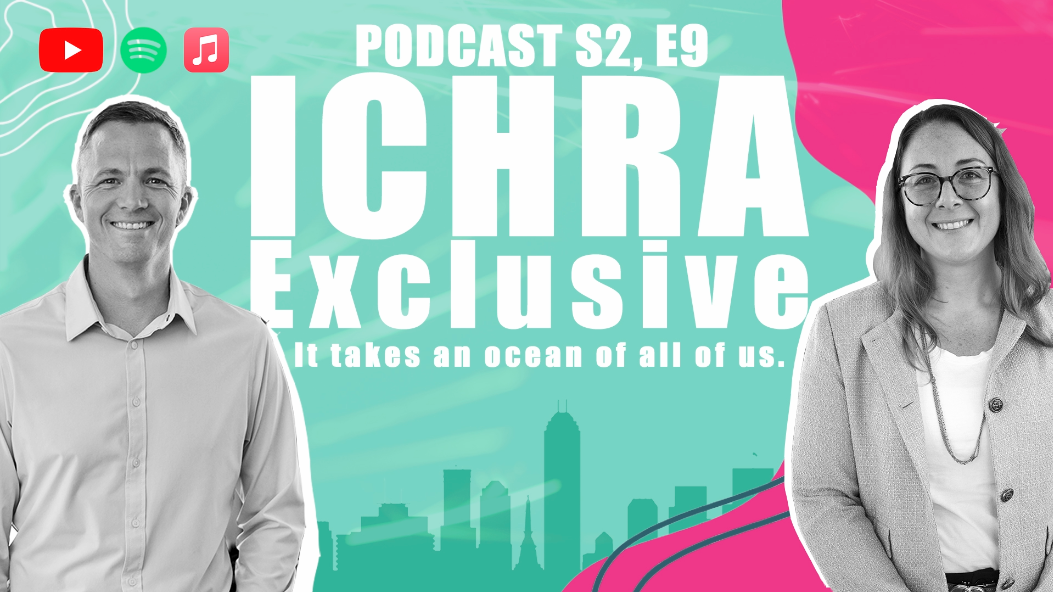
The ICHRA Exclusive Podcast is back, and this episode brings the carrier’s view to the table. Guest host Jon Whitmer, Senior Vice President of Carrier Relations sits down with Danielle Winiecki of Ambetter Health to dig into a gap hiding in plain sight: plenty of group brokers say they know CHOICE Arrangements, formerly known as ICHRAs, but far fewer are actually bringing them to clients.
Danielle is Director of Business Development for ICHRA at Ambetter Health, and she brings more than 15 years in group benefits to the conversation. That background gives her a rare inside look at how carriers really think about broker objections, individual networks, and what it takes to support employees long after they enroll.
We get into what Ambetter’s own research uncovered about where broker hesitation comes from, the objection group brokers raise most about individual plans, and where they actually have a fair point. Danielle maps out where a carrier’s role in CHOICE Arrangement starts and stops, how carriers and administrators like Remodel Health partner once employees are enrolled, and takes on the narrow network question directly. She also shares the new offerings Ambetter is rolling out for the 2027 plan year and how Centene is expanding CHOICE Arrangements to more of its own employees. To close, she names the one thing she hopes to see mature in CHOICE over the next three to five years.
If you’re a broker weighing individual plans, a carrier or administrator working to close the adoption gap, or just want an honest read on where the CHOICE Arrangement goes next, this one’s for you.
Watch or listen to the ICHRA Exclusive podcast
Episode transcript
Danielle Winiecki: We do see more opting in for Gold level plans than Silver and Bronze, which is different from what the ACA or individual market has historically seen. So it's nice to see that when an employee is given an employer contribution, they're thinking about that decision. They're willing to buy up and pay for the plan that works best for them and their family.
TJ Witham: Welcome back to the ICHRA Exclusive Podcast. Today, guest host Jon Whitmer takes the mic with Danielle Winiecki, Director of Business Development for ICHRA at Ambetter Health. Danielle has spent more than 15 years in group benefits, and she's bringing the carrier's inside scoop on CHOICE Arrangements, broker objections, carrier and administrative partnership, and the truth about individual plan networks. Let's dig in.
Jon Whitmer: Well, Danielle, it's fantastic to have you here at the Remodel Health office, downtown Indianapolis, all the way from the great state of Colorado. So welcome. Real excited for the conversation today. And open us up, why don't you just tell our listeners a little bit about yourself and your current role at Ambetter?
Danielle Winiecki: Yeah, thank you so much, Jon. It's wonderful to be here. Indy is beautiful today, by the way, and you have a great view from this office, so I'm not sad about it. So I work at Ambetter Health, specifically focused on business development for Ambetter Health Solutions. Channel Solutions is what we developed with ICHRA in mind. So we have a team of folks, and we have a couple of different realms, actually. So we have a business development team that is really our connectors. So we're thinking about them from broker education, group broker education, adoption, awareness, helping them understand the concepts of the individual market. We partner with ICHRA administrators like yourselves, of course, and really focus in on being that dedicated line and source for feedback, for helping with member escalations, for making sure that we can really hold up this ICHRA or CHOICE ecosystem. And the biggest thing to always think about here too, that I think sometimes the group brokers even get confused about, is that we don't sell ICHRA at Ambetter Health. We are focused on providing the plans, the options available for employees when they do implement ICHRA. So partnering with the group broker so that they know, and that they can use us as a dedicated resource for the individual market and knowledge about the individual market and what we have to offer. As well as partnering with you all to really capitalize on making sure that we fill those points of contention, but also being that escalation point of contact. So really honing in on ICHRA and CHOICE and the market and building it, being able to build this market together collectively.
Jon Whitmer: Fantastic. Can you tell us a little bit about your background too? It's really interesting to hear what led you to Ambetter and the ICHRA team over there. So what can you tell us about your professional background?
Danielle Winiecki: Yeah, absolutely. So I started my health insurance career a little over 15 years ago, and I've been focused in on a couple of different channels. I started at a Chamber of Commerce and gained traction on how small businesses elect benefit programs for their employees, and how they could capitalize on the solutions that they might need to develop for those folks. And then I moved into an HR-focused role, where I was being the educator to our employees on how to utilize their benefits and what their benefits package looks like. Cut to, I started working for a large group broker and helped them develop solutions for large market employers. So those over 5,000 lives, and really starting to hone in on the complexities that come with more volume and size alongside the benefit program that can be offered across the board. So now, looking at CHOICE or ICHRA, it's really exciting to bring it back to that one person at a time, and really start to think about, how do we evolve their member journey? What does that look like, from educating them as an individual consumer to what does the employer actually need and want out of this benefit program? And then being that connector that I mentioned, to really help if a member has an escalation, if an employee needs something different, if their situation is unique, if they have a unique health consideration, we're putting that paramount and helping to educate not only the broker on process for the individual market, but also thinking about how that employer capitalizes on their employees and helping them to be informed decision makers for their own health insurance and their lifestyle. Yeah.
Jon Whitmer: Seems like a really unique or well-rounded background. You've almost covered every audience within the ICHRA ecosystem, from the small business, to serving on an HR team and thinking about the actual employees that you're serving, and then the producer side. So I would love to hear, how does your background experience, how has that influenced or informed the way you view ICHRA?
Danielle Winiecki: Yeah, I feel really lucky, honestly. I have had the opportunity to sit in multiple seats now, to see things from different lenses, to understand the full ecosystem and what everybody might be thinking about, and how they're reacting to change, how they understand information. You capitalize on different areas of opportunity where somebody can learn a little bit more than somebody else. In one way, a member, an employee, might have a very different need than the employer. In fact, that's probably the case in most situations. And that broker really needs to be that partner to that employer. And then, looking at the administration space, and how the ICHRA admin wraps everything up for us, makes it really exciting to sit in all of those different seats, to then play on the carrier side of house now, and start to think about that member journey, some of our business operations components behind the scenes, continuing to be that connector in the space, having really cool discussions like this today, and having the ability to influence plan design decisions. So how we go and how we develop plan options, what our networks are to look like. I have all of that background and history that I get to pull from, and knowing that everybody thinks about things a little bit differently, so I can pull all of those different experiences in and bring it to the table.
Jon Whitmer: I think it's really interesting that not only you, I know there are others in leadership on the ICHRA team at Ambetter that similarly have the background working for one of the jumbos. And if you put that producer hat on, like you said, group brokers are evaluating ICHRA at an increasing rate, but there's still some hesitancy, if we're honest. There are still some objections around the solution. And so I'd love for you to respond to that. Maybe where are some of those objections valid, moving to individual plans with more narrow networks, or whatever you would say in response to what those objections are, and how Ambetter is thinking about the future growth through group broker distribution?
Danielle Winiecki: Yeah. And I think the cool part about all this is we are so invested in this space at Ambetter Health that we actually just issued our own proprietary research on ICHRA, to get a better sense for what the group brokers are feeling, what employers are doing as well. So in addition to pulling from our own personal experiences being a group broker, we're also starting to validate what those group brokers actually care about, what they're talking about, and where they might have objections. What that research told us was that more and more brokers are familiar with ICHRA, they're encouraged by the adoption, and they're excited to see what's happening, but they aren't presenting it to their clients as often as they're telling us that they're aware of it. So we see a little bit of a disconnect, meaning we know there's still work to be done. We still have to get them educated on the individual market. I think sometimes it comes from a place of uncertainty, or perceptions from the past, and we're continuing to evolve what that looks like. But we do have to put the proof in the pudding, so to speak. We need to make sure that group brokers understand what we are doing collectively. And it can't just be us, it has to be the entire market as a whole. So as we talk about some of those objections, whether it's the lack of options or the lack of network, or it could be a multitude of different things, we're really starting to hone in and capitalize on the different options that people could have, educating around additional programs that we're offering. So at Ambetter Health, we're really excited, we'll have some Marathon Health and Ambetter Health plans this year that'll be available off exchange, ICHRA specifically in mind. And those are focused to bring a zero-dollar PCP, zero-dollar lab experience, with a relatively nice deductible, to encourage folks to utilize an advanced primary care approach, something that historically hasn't been in the individual market. And now we get to bring it there, knowing that we can pull from that group experience, and bring some of those good things that have been built over time to this table, to say there's more out here, and we're here to stay, and we want to build this group and this market together.
Jon Whitmer: We get really excited about those. And correct me if I'm wrong, but the Marathon Health partnership, and those plans that have the advanced primary care integrated into them, those are specifically for your ICHRA off exchange membership.
Danielle Winiecki: Those are. Designed off exchange with ICHRA in mind, so the max out-of-pockets are a little bit lower. The deductibles are relatively comparable to what we see in the traditional group market as well.
Jon Whitmer: So that's where, yeah, the rebrand, this is where I think the rebrand of CHOICE really can take off, right? Where Ambetter's designing specific products to give people and their families real choices. And some of those products, it sounds like you're mirroring what they're used to on the group side, where they've had access to direct primary care. And now they can still have that via ICHRA, in an individual product with Ambetter. It's really exciting. And is there anything more you guys are doing that you're developing that you'd want to share?
Danielle Winiecki: Yeah, absolutely. So we actually have two other programs we're in the process of launching right now, and one of them is Calm Health. It's actually an app that people can download free of charge with their Ambetter Health membership, their Ambetter Health Solutions membership. So if they're electing an off-exchange plan with us, Ambetter Health Solutions specifically, they'll have the ability to opt in for that program, and they'll receive meditation support, well-being support. There are some really cool sleep stories on there. You can have Morgan Freeman talk to you as you fall asleep. It's pretty cool. And then we also have another program called Noom that we partnered with, and that's a discounted weight loss program. It also comes, for eligible consumers, with a discount to GLP-1s. So we know that people in the world, in America, are really focused on weight loss right now. GLP-1s continue to be the talk of the town, and we knew we needed to come up with a solution to help support that community. And instead of embedding it directly into the plan itself, we wrap this program around it, so that those users that do want to utilize it can pay for it, and they'll get a discounted rate with their Ambetter Health Solutions membership. So we're excited about that too.
Jon Whitmer: Fantastic. Yeah, again, we like to say here at Remodel, we still feel like we're in the early innings with ICHRA. And I think the innovation is really just starting, and it's exciting to see the innovative approaches that you all are taking when it comes to plan designs and partnerships. I think it's only the beginning, which, yeah, we couldn't be more excited about.
Danielle Winiecki: Yeah. I mean, imagine what we can evolve this market into, and all the things that we get to do that we can pull from our experience. We know what happened in the traditional group market. We know that sometimes some of those employers are seeing unsustainable premium increases. We don't want to impact the individual market in the same way, but we can pull from some of those learnings and those lessons to develop better plan designs, or different plan designs, that will help support individuals instead of employees under one group model.
Jon Whitmer: Yeah. You've mentioned all the different key players in the ecosystem. Obviously, you've got the group broker who has their employer clients, you guys as a carrier, us as an ICHRA administrator. Can you give our listeners a little bit more clarity as to where you see your role starting and stopping, or just what a day-to-day looks like for your team?
Danielle Winiecki: Yeah. I think, for us, I keep honing in on this connector role. I really want to elevate our team to be the educator of the individual market. I think it makes a ton of sense, because that's where we are focused, that's our bread and butter, is really focusing in on individual coverage within the individual market, and now more so specifically off-exchange for ICHRA. We really want to be able to hone in on that space and help group brokers understand the complexities that come along with it, the differences from the traditional group market space, how they can best capitalize on a full analysis, coming from network disruption to plan design review to defined contribution or premium costs that they need to maybe look at as well. So we can bring all of those different edge cases to the table to help broaden their awareness and education, and then continue to be that partner to you all for member escalations, or when things go bump in the night. We're there to help support you and make sure we can resolve those issues that come up. And like I said before, we don't want to get in your way. Our focus is really just to elevate the category together collectively. So if you find other ways in which we should be jumping in, or you identify gaps, we are all ears for that. We want to help to capitalize on this together.
Jon Whitmer: Yeah. Part of our partnership is that our growth team works really closely with your team in a lot of those mutual relationships we have with group brokers. And it's been really helpful to have your team almost as a neutral voice, like you see the whole ecosystem, and you can really help group brokers identify the right partner for the right clients. And so I've seen that play out through our partnership.
Danielle Winiecki: Absolutely. And I think the cool thing is, we want to come to as many things as you want us at. We will be there with you along the way. We will partner with you at those events, meetings. We want to be introduced to those folks so that we can help spread awareness and more education. There's a lot of preconceived notions and mixed opinions about the individual market. I think we can really come to the table to help educate and spread that awareness about what's happening, what's really happening, and how things really work, and drill into things like risk adjustment, or plan design specifics, and max out-of-pockets being too expensive, or what have you. But our focus is just to be that partner to you. We want to help to elevate the category of ICHRA and CHOICE, but not get in your way either, so we want to work alongside you.
Jon Whitmer: Yeah. I think about, we've onboarded a couple of large employers in your markets. And to your point around just the ongoing education, you all sent out representation. You were there actually for the Employee Benefits Day and the onboarding, to talk to employees about your products, your network, so they could really be informed when they're making their choice on which healthcare coverage they're going to choose. Talk about how else you are partnering and educating in those ways.
Danielle Winiecki: Yeah, absolutely. So the benefits fairs are really fun for us, because we don't always have the ability to get right in front of that member, or that potential member. So it's exciting to be able to spread awareness just about who Ambetter is, because, as we've talked about today, we're an individual carrier, and not everybody knows us coming from the traditional group market. So it makes a difference when we can spread our own awareness out there. Other areas that we collectively work with the market in general are, we go to lots of conferences. We love the SHRM chapter events. We love the group broker symposiums, or individual conferences that those group broker houses might be having, and really starting to capitalize there to bring more awareness and education about the individual market. But a lot of times we look to partner with you, or with an ICHRA administrator, at those events, to make sure that we can bring the whole table, the whole ecosystem, to the table, to help make sure that they understand who does what and how to best capitalize on these partnerships.
Jon Whitmer: It feels like our team and your team are talking almost daily, all throughout the year really, right? When it comes to, maybe it's a member issue we're working together to solve, or maybe it's us giving some feedback around products you guys are designing for that next year, new markets you're entering, and how we can collaborate. So really grateful for the ways we get to partner on a regular basis in this work.
Danielle Winiecki: I would just say, I think capitalizing on it together makes a ton of sense. Like, we can make a difference together collectively more often than singularly focused. So it's really exciting whenever we get the opportunity to even hear feedback from you all, or work on those member escalations. We can only make things better if you help us identify what's happening, so we can make it better for the next person, or the next time that something like that comes up. So I would say honing in on our partnership is incredibly important to the entire ecosystem. And whenever a group broker is considering their options, the service model, the partnership that you all have with other carriers, is huge. And that's an entire selling point from their employer lens as well. How do we help make sure their employees are having a good experience? By having all of those different channels open and available, it makes it so much simpler and more streamlined.
Jon Whitmer: That's right. Agreed. Most group brokers are familiar with, or most employers are familiar with, the BUCAs, right, Blue Cross, United, Cigna, Aetna. And if they're considering a move to an ICHRA, naturally, if I'm the member choosing my plan, the CHOICE Arrangement, I get to choose my own coverage. I may be familiar with Anthem, and Anthem's headquarters are just down the street here in Indianapolis, and they've got the largest commercial block in the state. And you're used to that network. And then you move to an ICHRA, and you see an Anthem individual plan. The assumption could be that it's the same network, but we know it's not. And so that's where we have to educate our members to know the difference when it comes to plan design networks, maybe for some carriers they're familiar with, and the difference between the commercial network and the individual. How does Ambetter, as an individual ACA carrier, how do you build your networks out? Tell us about what that looks like, and how you educate members on your plans that you have across the country.
Danielle Winiecki: Yeah. And in the ICHRA construct, or CHOICE construct, education is paramount in general, right? I think this is the first time that some employees are choosing from a lot of options for the very first time. So it's huge.
Jon Whitmer: It is.
Danielle Winiecki: I think the cool part, though, that I do get to talk about at Ambetter Health, is one of our biggest differentiators, which is that we have a nationwide network. And what I mean by that is, we have different licensures, HMO, PPO, EPO options, depending upon which state you live in, but we do have cross-state-line network access. And what I mean by that, or more similarly called in the market, is network reciprocity. So if you live in Indy and you travel to Florida, for example, on vacation, you can see an in-network Florida provider in Ambetter Health Solutions, as long as you look them up on the find-a-provider tool, see the in-network provider, you'll be able to see that doctor, as long as they're accepting new patients, with no out-of-network charges. And that's available across our Ambetter Health Solutions product suite, in which we have Ambetter Health available in 29 states today. We have our Ambetter Health Solutions product suite available in 13 states. We'll expand into a few more for 2027 that we're really excited about. So that will continue to expand as our network continues to improve and move forward and evolve as the market evolves. So I think, even though PPOs are something that we continue to hear, and while we want them to be a past conversation, it will continue to be something that people are used to. So they think PPO is a good plan, it's good coverage, it gives me out-of-network benefits, but it really gives you a higher price tag. And if your primary care physician isn't even in your network, then you're going to pay an out-of-network charge for that anyways. So it's really important to come back to the education discussion. So platforms like yours, when people are enrolling in benefits and getting a better understanding of what those options look like, helping to educate them along the way, to make them an informed consumer, know how health insurance works, so that when they go to the doctor's office, they know how much they're going to pay. And having that affordable access is so paramount, which is why it's so exciting that we have this cross-state-line access, or network reciprocity, available. It just creates this ability, and this access, to be more broad, available in more places than just localized to the state in which they live.
Jon Whitmer: Well, we have membership all around the country, and it is a really big deal that you have that reciprocity for our members, as they're considering their choices when they're enrolling in plans. And the PPO, I know you'd mentioned the Ambetter Health Solutions, those are your ICHRA products built for the ICHRA market, right, off exchange. And I know you have some PPO options in certain markets. What are you guys seeing when it comes to what members are actually choosing? Are they choosing those PPO plans that you have, or are they choosing other metal levels?
Danielle Winiecki: Yeah, I'll say it's a little bit of a mixed bag. So we definitely see, in our ICHRA market, specifically your CHOICE market, with our Ambetter Health Solutions products, we do see more opting in for Gold level plans than Silver and Bronze, which is different from what the ACA or individual market has historically seen. So it's nice to see that when an employee is given an employer contribution, they're thinking about that decision, they're willing to buy up...
Jon Whitmer: Yeah.
Danielle Winiecki: ...and pay for the plan that works best for them and their family.
Jon Whitmer: Interesting.
Danielle Winiecki: And from a PPO versus EPO or HMO product suite perspective, I think because the landscape of where we offer which plans is so different, it's hard to compare. It's a little bit of apples to oranges right now, right? But it is important for us to see those trends in enrollment, and how people buy up or buy down. And depending upon the programs, like the Marathon Health plans that we'll be offering in our Ambetter Health Solutions product suite, in Indy specifically, and St. Louis, it'll be exciting to see who enrolls in those plans and what that starts to look like. Having new plan options like that, where we are bringing advanced primary care to the table, to the individual market for the first time, is really exciting. As we continue to innovate in this market and build towards what the future could evolve into, it's really cool to do these unique programs and plan designs that we can sort of see what the market reacts to. How people care about what they care about, and when they need it, and how they need it, and how they want to consume their own health insurance, is also exciting. Consumer behavior is huge when it comes to not only satisfaction, but how do we build plans for the future, and what does that start to look like? So it's really exciting.
Jon Whitmer: I know there are a lot of people on our team who know about the Marathon Health partnership and are excited around the opportunity to have that access to advanced primary care. And so inevitably, I think we'll be able to really educate members too that have access to those products around the features as well.
Danielle Winiecki: So the one thing I'll just sort of end on this is, for the group brokers in the audience, I think it's important to note that when you're doing a network disruption analysis, when you're considering other options, ICHRA might be part of that option. Think about how those carriers in the individual market will navigate those out-of-network items or claims that could arise, and how each of those carriers come to the table. And I think they can lean into you guys. You at Remodel Health are educated, you guys know what's happening in the individual market. You have close relationships with us and other carriers. It's important to be able to capitalize there, and help them understand that a little bit more analysis might take them even further, to help showcase how this could be a great fit for their next client.
Jon Whitmer: Absolutely. Yeah. We, you know this, but at Remodel Health, we really carefully design ICHRA strategies in partnership with group brokers, and really attempt to mirror the same level of access to care that they've had on the group experience, on the individual market. And so we then know which products, which carriers to partner with, so members have a similar experience and access to the care they're used to. So appreciate you saying that. I'd be interested to know, so Ambetter is the leading ACA carrier in the country. You're on the ICHRA team. What can you tell us of how Centene leadership, how do they view ICHRA and the future growth of this market specifically?
Danielle Winiecki: Yeah. I mean, it continues to be a strategy for us collectively at Centene. We feel like we are well positioned in the individual market. We also don't have any group benefits, any group plans that we're offering today, where other large group carriers might be competing against themselves, frankly. So we feel like we are really well positioned to stand up tall, be a thought leader, to really promote this category, to help more American workers have more choice available to them. So our focus is really to continue to elevate that. So you'll continue to see us in the market landscape. We'll continue to partner with folks like Remodel and other admins that are out there, and really partner even with carriers in the space too, to help bring more awareness, push certain pieces of legislation as it makes sense, as it helps support the overall structure and ecosystem of the CHOICE Arrangements, and how we can continue to push that forward to really make it long-term and scalable, and help to evolve the employer insurance market in general.
Jon Whitmer: So, as Ambetter, you only have individual products, individual plans. Most group brokers, you're familiar with the BUCAs. How do you see Ambetter's dynamic and relationship with the Blue Cross, Anthems, United, in the individual market? How do you think about that?
Danielle Winiecki: Yeah. So I would definitely say that it takes an ocean of all of us to make this work and function, right. So when a player comes into the mix, or exits, it does impact the entire ecosystem. So I think it's really important to have choice and have multiple carriers in each market, to be able to service those Americans that are electing individual coverage. So for me, I'm hopeful and optimistic that, even though we've had some exits, some will come back around, because they'll start to see that this market is growing, and that they can capitalize on that growth. They can have a strategy for both group and individual, and be successful at both.
Jon Whitmer: I hope so too. So, really interesting that you guys pulled that data from your group broker relationships, and I'd love to learn how that's informing where you think the market is today, and where you think we're heading in the next couple years.
Danielle Winiecki: Yeah. I think there are a couple of ways that we've started to look at this data and really start to pull it apart. I think it's important, whenever we do research, to look at all angles. And the first thing that we started to look at was capitalizing on these group brokers to really understand what their focus is. Are they already selling ICHRA? Have they always been a naysayer? Are they focused a little bit more in group and starting to get excited about it? So we have this wide array of different group brokers that are coming to the table to help us objectively look at this audience. And like I said before, we're really starting to see more and more of them get excited about ICHRA. What we're also seeing is that it's helping us understand what that market landscape looks like. So I think we all know, even from HRA Council data, that small group moved first. Makes sense. It's a little bit simpler for them to make that happen. They also feel the pain of premium increases a little bit more than some of the larger employers. So it makes a ton of sense. I think now we're starting to see a shift towards that middle market landscape. So thinking 50 to 1,000, we're really starting to see that capitalized. But we can't also ignore other large groups that are considering ICHRA, like ourselves. Centene, we actually implemented ICHRA for Indiana work state employees in 2026. We're expanding that program to Ohio and Oklahoma, which is really exciting, coming from somebody on the ICHRA team, or CHOICE team, I should say. So it's really cool to see our own strategy for a large market employer building towards ICHRA, and really using that classing structure to our advantage, to build out where we feel like the opportunity for those employees is a little bit better. We can still give them a generous contribution based upon how the individual market and landscape looks, and they still have choice across carriers, which is also really exciting. We don't require them, we don't want them to all select...
Jon Whitmer: I was wondering.
Danielle Winiecki: Right. Yeah. Sure. So we want to educate them, and we want to make sure they make the right decision for themselves. Is their provider in network today? Do they have pharmaceuticals or drugs that they need to make sure are covered? What does that cost share look like? Ambetter Health Solutions might not be the only option, or the right option, for them, and we would want them to choose what's best for them.
Jon Whitmer: It's a true choice, yeah.
Danielle Winiecki: Exactly.
Jon Whitmer: I think it's fantastic. I mean, our CEO Austin says all the time, we need to drink our own champagne. So, Remodel Health, we have 220 employees, we're on an ICHRA. And I think it's really fascinating that a Centene organization your size, similarly, as what you're describing, really is splicing off certain segments and markets. We think ICHRA can be really viable. And we've talked to other carriers, commercial carriers, who see that as kind of the next iteration, to where some of these jumbo employers splice off certain segments onto an ICHRA, which we find really interesting. And that's exactly what you guys are doing today, and you're expanding that model.
Danielle Winiecki: And for group brokers, it's a really cool strategy when you think about it, right? If you have some higher utilizers, or high-cost claimants, in a certain area where it would make sense to carve out that class and make it available for them under the ICHRA model, it might help to support both group and ICHRA within that construct. And I think that's a really unique way that the broker can bring in a whole new strategy for that employer, continue to show their value, and then have a couple of extra partners on the side too.
Jon Whitmer: What have you guys gotten feedback, or what have you learned, having your own employees on an ICHRA, enrolled in your own products? What have you learned from that?
Danielle Winiecki: It's the coolest experience, because they can bring things up that they never had to think about before. And now, especially if they've enrolled in an Ambetter Health Solutions plan, they have the ability to also help us support change, and positive change for the better. The member experience is continuing to be paramount for us, and even more so as we think about member versus employee, and some of the things that we think about when it comes to the folks that we've had historically as members. And now, as we have employees entering the ICHRA market and our plans, we're starting to think about, how do we capitalize on their satisfaction, and what does that start to shape up like? Are they interested in different styles of plan design, or are they more focused on their providers and their drug coverage? Like, what does that look like for them? So we survey them, and hopefully they're not too mad at us right now. I think it's really important for them to be honest and transparent to us. But it's been really cool to develop more relationships with folks, to get a better sense of how they feel, in the trenches with us. Change can be difficult, but difficult doesn't mean it's impossible, and I think it's just really cool that we get to capitalize on this together.
Jon Whitmer: That's great that you're expanding the program. And yeah, I think that's a credit to your investment in the solution long term.
Danielle Winiecki: Yeah. I personally can't wait for it to come to Colorado, I mean, where I live. So I'm ready to enroll under an ICHRA.
Jon Whitmer: Love it. That's great. That's great. Okay, Danielle, this is the question that TJ always closes with, with guests. So, from your role, where you sit today, if you could wave a magic wand, what's one thing that you hope changes or matures in the CHOICE Arrangement market over the next three to five years?
Danielle Winiecki: Man, one thing is really hard to pick, right? I think I would capitalize on removing the friction points. So, in our surveys, in our feedback sessions with group brokers, with employers, even with members themselves, we hear about little friction points of, this could be better, if or when you make this better, I'll be more satisfied. So I think I would really start to capitalize on those, and we move into a journey of identifying what those friction points are, things that the carriers can solve, that we can start to build upon. And ideally, once one of us starts to do something, the others can follow. And I think building the connectivity that we already have collectively across our two teams is also paramount. So helping us to identify what those are, and how we can make them better, everything from payments and enrollment details to day-to-day operations and member support, and how we communicate with members. I think historically speaking, individual market ACA is paramount there, but the way we communicate to our ICHRA employees and members, or CHOICE members and employees, is a little bit different. We want to make sure that it aligns with what they're used to. They're used to hearing things in a different way under the traditional group model. We want to be able to capitalize on what makes sense for them, but making sure that they still know that they have ownership over that individual policy.
Jon Whitmer: Yeah, it's critical. And we at Remodel, we like to say we're the safe place for a group broker to place their largest ICHRA with. And it's mostly, I think, around smoothing out those friction points that you talked about. Like, we have high confidence, and when we're featuring Ambetter's products, we're going to ensure members get enrolled, premiums are getting paid. And if there is a situation or a problem, we know you guys are going to help us solve it, and that gives us a lot of confidence, and makes sure ultimately that members are going to have a really positive experience, along with the networks and plan designs that we talked about too. But yeah, it's just paramount, I think, in the early innings here.
Danielle Winiecki: I agree. And I think we have the ability to make that change now. Like, let's do it. Let's hunker down, figure out what these friction points are, and capitalize on them. Let's remove the barriers to entry, remove the preconceived notions, or perceptions, that we've had for the last decade, and figure out how we can better capitalize and support the whole ecosystem. One thing that we talk about a lot is a bat phone. Group brokers are constantly like, I just need to know who to call when. And while I want to create a bat phone, and I'm happy to answer that when it rings, I think it's also important for us to have these points where we know who is designated to support this issue. So whether it's you all as the admin, and that service partner, really helping us to hone in and understand what went wrong, and then bringing that to us so that we can fix, resolve, push forward, whatever needs to be done. But we can all work together collectively, and be on the same page, and be aligned. We want to cultivate that relationship with that group broker, just like you guys do too. But we also don't want to get in your way. It's important that we collectively work together on this. And while there are pain points in that process, I think it's important that we've already developed this great partnership that we can continue to just hone in on, capitalize, and make things better in the long run.
Jon Whitmer: Yeah. I mean, even when I think about the last couple of years, how far the market's come, and nothing's perfect, right? And so it's exciting to see how we continue to streamline and smooth out those friction points you've talked about, and really where this can go. You guys have just been a great partner, open with your feedback and suggestions of little changes that actually make a big difference for the members, the collective members we serve, for the group brokers, whatever it might be. So really appreciate the open lines of communication we have, and the responsiveness to, how do we improve this overall experience?
Danielle Winiecki: Absolutely. It makes a huge difference, and we totally agree, and love our partnership with you all. It's important to us, and especially for this entire ecosystem, and as we continue to expand this market. And you know, some projections out there on the CHOICE, or ICHRA, market, defined contribution, whatever you want to call it, it's important to know that as we grow, we have to develop these partnerships, or continue to build upon them, so that we can all make sure that we're building towards a successful future together. So it's exciting.
Jon Whitmer: Absolutely. All right. Well, Danielle, thank you so much. Had a blast today, and found today's conversation to be really energizing. I'm really grateful for the partnership.
Danielle Winiecki: Yeah, me too. So grateful for the partnership, and it's been a huge pleasure. Thank you so much for having me.