By TJ Witham on Nov 11, 2026, 6:00:01 AM
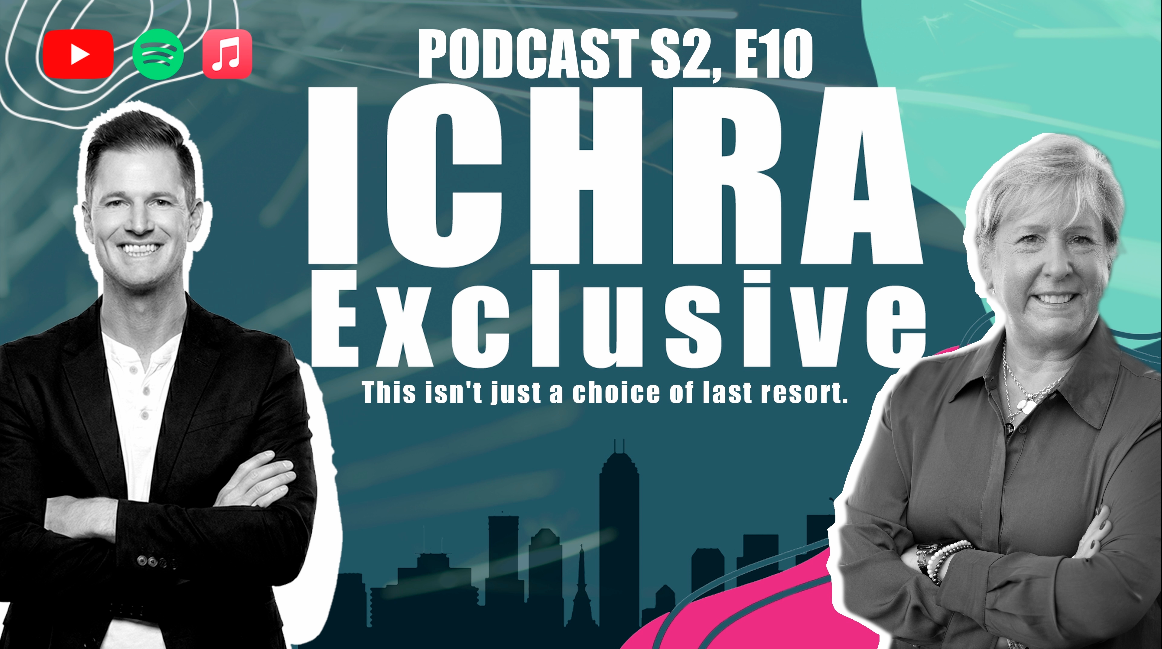
The ICHRA Exclusive Podcast is back, and this one goes straight to the source. When one of the largest insurance brokerages in the world decides which CHOICE Arrangements partners earn a spot on its preferred list, what does it actually look for?
To find out, we’re joined by Michelle Jukoski, EVP of Technology Strategy at HUB International. With more than 30 years in benefits administration and HRIS platforms, Michelle has a front-row seat to how benefits technology has evolved, and she’s now helping organizations navigate AI, automation, and employee experience at one of the biggest names in the industry.
We start with what her role really involves, then dig into how her view of CHOICE Arrangements, formerly known as ICHRAs, has changed over the years. Michelle explains how HUB International selects its national preferred vendors and what sets the vendors on that list apart. We also cover where CHOICE adoption is taking off, how patterns differ by region, and how she decides when CHOICE is the right call compared to other benefit models. To close, she shares the one thing she hopes changes or matures over the next three to five years.
If you’re a broker, an employer weighing your options, or a vendor wondering what it takes to earn a seat at the table, this conversation is for you.
Watch or listen to the ICHRA Exclusive podcast
Episode transcript
Michelle Jukoski: He said, " You know what? All of my claims experience and everything that my personal family went through is not going to impact my employees.” He was so proud of the choice that he made, and the fact that it just really felt very positive for him. And that the rest of the employees would not suffer from a premium perspective.
TJ Witham: Welcome back to the ICHRA Exclusive Podcast. Very few people have seen benefits technology evolve like Michelle Jukoski. After more than 30 years in benefits administration and HRIS leadership, Michelle is now EVP of Technology Strategy at HUB International, helping organizations of all sizes navigate AI, automation, employee experience, and more. Today, we're super excited because she's going to talk with us about CHOICE Arrangements, formerly known as ICHRAs, where they're the right fit, what innovation has looked like, and where they're headed.
TJ Witham: Well, Michelle, it is an absolute treat to have you in Indy. So I wanted to just say, first off, thanks for making the trip all the way from Connecticut. I know you got in last night. We got to enjoy dinner together with a few other members of the Remodel team, but just wanted to say thanks for making the trip. Super excited to have you as our guest today.
Michelle Jukoski: Well, my pleasure. Thanks for having me.
TJ Witham: Yeah, it's our treat. So I'm really excited. For those who don't know, Executive Vice President of Technology Strategy for one of the largest brokerages in the world, at HUB International. So I really kind of wanted, just for the audience to get to know you as we kick off. And just tell me, what is that title? I'm super jealous. Maybe one day I can be an EVP of Technology Strategy. But I would love to hear: what is a day in the life of Michelle as you lead technology strategy for such a large organization like HUB International?
Michelle Jukoski: That's a great question, TJ. And it's been many decades in the making. I found myself at the beginning of my career being fascinated with what then was very new from a technology perspective, ben admin. And the thought of employers being able to move away from having paper forms, paper, was such an intriguing thing. So despite the fact that at that time I was working in sales and was director of operations for a small agency, I just really got interested in the technology piece. So I really developed that over the years. We were a small agency. We were more like large group consultants, not a lot of SMB type of work. And it really started to become a niche, right? Year over year, you can only save your clients so much money. So what else are we going to do for them that's new and interesting and innovative? So that's how I started to get involved in ben admin back then. We were early adopters. As you can imagine, there were good experiences and bad experiences.
TJ Witham: Yeah.
Michelle Jukoski: But we evolved our strategy, quite frankly, as the vendors evolved as well. They didn't know what they didn't know either, those first few years, and the idea of passing files and things was a little bit foreign. So we were acquired by HUB 15 years ago. And at that time, you saw one HUB; all HUBs were very independent. And I started to see an opportunity to take what we were doing in one little office in Manchester, New Hampshire, and start to expand it regionally. So I did that regionally, and then, fast forward, just as technology continued to develop, it turned into a full-time national role. We have a team of over 30 people talking tech today, all things. Now, back then, if you would have asked me if we were going to do anything other than ben admin, I would have said absolutely not. But today we consult on everything, from ben admin, HCM, payroll, ACA, and then enter in ICHRA.
TJ Witham: Yeah, ICHRA/CHOICE. We were joking before we kicked off, exactly that, that it's a deep groove of ICHRA that's just going to be hard to unlearn with the new name of CHOICE Arrangements. So please, anyone that's listening, forgive us if we go back and forth. We're learning to say CHOICE more and more frequently. I enjoyed, even over dinner last night, it was fun just to catch up and hear your feedback on, man, you, I don't know if you want to say inherited, but you were kind of given, when ICHRA first passed, hey, go help us figure this thing out. And ICHRA in 2020 was way different than it was, I would say, in the 2023, 2024 time frame, to now, where adoption has continued to accelerate. So I would love to hear your feedback on what ICHRA or CHOICE has been like over the last six years from your seat.
Michelle Jukoski: Yeah, sure. So it's been a very interesting journey. I was introduced to ICHRA, actually, by some friends in the technology space that were in ben admin and had developed a platform for ICHRA. I can still remember the first phone call with them, and I was like, ICHRA? What exactly is that? But I quickly was very intrigued, because what they were showing was, we've actually taken the group experience, a traditional ben admin experience, and are able to now enroll in individual plans. All the way down to the point of, and we talked about this last night, the banking piece.
TJ Witham: Yeah.
Michelle Jukoski: Right. And making sure that the employee experience was going to be similar, and employees weren't going to have to worry about having a traditional HRA and paying their premiums and getting reimbursed, because what family could afford to pay their entire premium every month and then get reimbursed? So I have to admit, I kind of geeked out and really started to dive in. As I was doing that, we had a couple of progressive producers in Massachusetts that had heard about ICHRA and came to me and said, " Can you help us find a solution?” And I said, well, I actually happened to have one. So we went ahead and put a couple of groups on ICHRA for the January 1 of 2021 open enrollment. Just like our early ben admin experiences, it was a little rough.
TJ Witham: Yep.
Michelle Jukoski: As a matter of fact, it was very rough; I'm not going to lie.
TJ Witham: I think all of the groups that moved to an ICHRA now need to talk with the groups that moved in 2021, and it'll actually give them a lot of appreciation for how smooth it actually is now, compared to what it was.
Michelle Jukoski: When I say we paved the way, we definitely paved the way. And those were the dark days of COVID. So we were dealing with that individually, and then these experiences with employees trying to enroll in individual plans. I think we learned every lesson possible that year. However, I can actually say with confidence today, those first few groups that we placed, they are still in an ICHRA, and they're still with the platform we put them on.
TJ Witham: That's awesome. Yeah. I love hearing stories like that. Groups that are going on, yeah, fifth or sixth renewal with an ICHRA. It's also fun to talk with the employees that have been there that whole time. Because what we find is, oftentimes, that first year of moving to an ICHRA is the most change. So that's when there's frustration; it's so new, you've got all this choice, which can be kind of paralyzing for many people. But you get to year two, three, or let alone five and six, and you truly get to become, it's like consumerism for a health plan. And you get to see that for these groups that have been on ICHRA for a long, long time. So I love that you have that perspective now, with those groups still being on the same platform and still being on ICHRA, that many years later.
Michelle Jukoski: We do. But I will tell you what's different now. Those groups, the ones I call legacy groups, they're actually going out shopping now, because they want to make sure that the platform they're on is the best and providing the best experience. From an industry perspective, a lot of the clients that we put on platforms have a lot of high turnover, so we do have to continuously educate.
TJ Witham: Yep.
Michelle Jukoski: Employees. But it's certainly much easier in year five and year six. And it's even become a recruiting tool. Employers, when you learn how to position it correctly, it really is a recruiting and a retention tool.
TJ Witham: 100%. Yeah. We actually, fun little story. We just hired a new hire that starts for Remodel. He's going to be remote in Utah.
Michelle Jukoski: Okay.
TJ Witham: And he had a couple of competitive offers, actually. And one of the things he told me this week, believe it or not, was that he was leaning Remodel. We flew him out; he got to meet the team, he got to see the culture. He was like, man, you guys have something special.
Michelle Jukoski: Did he get to go to Commission Row for dinner?
TJ Witham: We didn't take him to Commission Row, which, if you're ever in Indianapolis, I'll plug Commission Row, awesome spot for dinner that we got to enjoy last night. But he left, and he actually called me a week after he was on site, and he said, " Hey, I've got this other offer; I've decided I'm going to work at Remodel.” And one of the things he cited was, man, we have what we call a window-shopping link. So any of our potential employees that we hire, we'll say, hey, this would be the amount of contribution that you'll get should you come to work at Remodel. And this was him, and he just got married, so him and a spouse, here's how much you would get to go toward picking a plan. And then we've got this window shopping link where he can see what the cost would be. He can do some provider searching, even some Rx searching in that technology. He said, as a potential employee, this would be the first time he's ever been offered an ICHRA, or CHOICE Arrangement, gosh, I did it again. He said that was like the light bulb went off. He was like, man, I've got such confirmation. Because he just said, for certain groups, this alternative is truly different. And he said, thinking about it through the lens of my own family, and what health plan would work, should I go work at Remodel, it was like it sold the deal for him. He was like, I'm so excited to be able to bring this alternative to employers that need it. And he got to go through it on the employee side, which was kind of fun.
Michelle Jukoski: To me, that's progress, right? And that's what this strategy and solution is all about. And I think it's almost apropos, the timing of it, of the change from ICHRA to CHOICE, because at its essence, we talk about all the financial components and different reasons why employers make that change, but sometimes it's proactively just wanting choice and giving employees the opportunity to pick what they want.
TJ Witham: Yep.
Michelle Jukoski: Because what he needs is probably very different than what I need today. And right, our price points are different. So that's a fabulous story.
TJ Witham: 100%. It was a cool story. Seemed relevant. One of the reasons I was so excited to have you in Indy, for lots of reasons, but one that I'm excited for our audience of the podcast to hear your perspective and expertise on is you've been working in CHOICE, ICHRA, since the beginning. But then also, at the end of the day, I always say a great employee benefits shop, your job's to be agnostic. So I know HUB has a ton of ICHRA experience. And personally, I've seen firsthand what your RFP, RFI process is like to vet ICHRA admins. And Remodel's not the only one, by any means, that HUB works with, which is okay. I actually love that, because I think it brings a lot more experience that you can share with our audience. Talk to me about how, as the ICHRA ecosystem has grown to now there's over 60 to 70 different ICHRA admins, how does one of the world's largest brokerages think about vetting which ICHRA admins or solutions you're going to send out to the team as, hey, these are the good ones that you should consider?
Michelle Jukoski: That's a great question. So for a couple of years, we stuck with that one provider that we initially worked with in 2020. But things got a little bit quiet in the ICHRA space, 2022, 2023. So we really didn't do very much. All of a sudden, in 2024, the market explodes. There's new entrants coming into the space; it seemed like almost weekly. And you can imagine, we have a large sales force. All of these vendors have a large sales force. And so our producers are getting pinged by multiple vendors. So it was at that time we said, okay, we really need to do a market search. We need to vet the top vendors and come up with a list of what we consider those that we would feel very comfortable referring our clients to. So we did our first round in 2025, and we had a lot of criteria that was very important for us. One, while we love shiny things, really longevity and the reputation of the vendors in the space was really important. Obviously, from my lens, this technology itself was very, very important. Again, making sure that, because this is such a paradigm shift going from the group world to the individual world, making sure that the technology experience was going to be as good or better than, what they were currently experiencing. So things like decision support, being able to go in and really hone in on what options are available to you, not just the system throwing back, well, there's six carriers in your market and here's 1,500 plans for you to choose from.
TJ Witham: Yep.
Michelle Jukoski: Right. Being able to narrow it down to what makes sense for my personal needs, or your needs. Quite frankly, the financial stability of these companies, there's a lot of startups, there's a lot of private equity money in this space, and we wanted to make sure that we selected partners that we knew were going to be around for a while. And I have to say, we saw someone leave the market earlier this year, and we saw some red flags during the RFP. So we were really glad that we had done that. And then commitment to the broker.
TJ Witham: Yep.
Michelle Jukoski: So we see a lot of SaaS solutions out there where, and we know the SaaS market is always just about how fast can you grow, but for us, keeping the broker in the conversation was really important.
TJ Witham: Yep. Yep. I love all that. And I also think I'd be curious your perspective, as the leader of ICHRA for HUB, it can also be very regional dependent. It can also be based on what the book of business looks like for a consultant or a consulting team. Because there are some ICHRA admins that I'd talk about Remodel, like we lean heavy on the service side. So we tend to do some of our best work in industries where there's a lot of human touch that's needed with the technology. So we do great in higher education and manufacturing and nonprofits, because there's a lot of, not to say those people don't like technology, but there are just people that like to meet with a person too as they're going through big change. Versus other industries where there can be other admins that maybe do a better job where there are different needs. So I'd love to hear, from your seat, how much of your job is almost like matchmaking of the ones you've vetted, saying, hey, for this consulting team, I think you should really check out this one or these couple?
Michelle Jukoski: So that's another great question, TJ. So I approached our ICHRA partnerships in the same way we did with our HCM, ben admin, and payroll vendors, that one size does not fit all at HUB. So we need to have multiple options for all the reasons that you just described. So oftentimes a producer or account manager will come to me and say, " Give me the lay of the land of this particular group.” And it's very easy to say, okay, you know what, that would be perfect for Remodel Health, because you need the high-touch service, you need the call center, and they have the tech and all of the other pieces. We have other groups that just don't need as much hand-holding and customer service, so another provider might be a better fit. Or it's a very complicated group coming off of self-funding, for example, where the financial analysis piece is really important. So we really do look at each opportunity individually, and then help the producer pick two or three to compare and contrast, to see which one would be the right fit overall.
TJ Witham: Yep.
Michelle Jukoski: Because it is a partnership, right? And the role of the broker, I think, in ICHRA has dramatically changed, where we're not just your advocate who can get a discount on your insurance premiums because we have relationships with the Blues. Here, it's now: we have relationships with these ICHRA vendors, and we need to really manage that and hone in on that, and the experience both for the employer and the employee.
TJ Witham: Yep. Yep. Totally agree. And it's almost like a shift too, where some of the service elements of a brokerage shift when a group moves from, like, self-funding to an ICHRA. Like, if the group was self funded, maybe a lot of that work on the analytics side, where you had access to claims, goes away. But then I always say, when you move to an ICHRA, the employee communication strategy, there are other elements that a brokerage will have to increase their level of service on. So it's like a give-and-take of, what is that value, what's the focus from a brokerage when there's a shift, especially from self-funding to ICHRA?
Michelle Jukoski: That's huge. And then the other part is, ICHRA and the health insurance is just one part of the overall strategy around benefits. It's, how do you then complement the ICHRA with other products outside of just your typical medical, dental, vision? It's become a very big voluntary play as well.
TJ Witham: Yep. Yep. Totally agree. Totally agree. I love that. I am curious, because HUB is a global organization, but specifically, obviously, we're talking about within the United States. What regions, and then industries, have you seen as hot spots for ICHRA as it's continued to accelerate in adoption?
Michelle Jukoski: So at HUB, we see a lot of ICHRA coming out of Texas, out of Florida, Massachusetts, and the Northeast. The industries that we're seeing the most, at least in the beginning, were hospitality or high turnover industries. Believe it or not, some of our first clients were ambulance companies, because apparently they have a lot of turnover. And they had all gotten to the point where they were just exasperated with increases, and then participation issues. So they were some of our early adopters that, in the beginning, saw a significant savings. And the great part now, five years in, is the cost predictability.
TJ Witham: Yep.
Michelle Jukoski: Right. Once you set that contribution, now it's much easier to set your budget year over year. And then, like I said, hospitality. The restaurant industry was hurt very hard, obviously, during the COVID years, and lack of participation in health plans. And again, it's kind of funny, there was an account that I managed for years and years as an account manager, and they had actually gone through every iteration with us as their broker. They were early adopters of ben admin. They had year-over-year increases that, after a while, they just couldn't sustain. So the next thing to do was suggest an ICHRA. Very difficult transition, just because, again, timing and education is so important.
TJ Witham: Yep.
Michelle Jukoski: Right. And getting that group to understand what it meant for them. Because what I always say to people is, with great choice comes great responsibility.
TJ Witham: Yep.
Michelle Jukoski: Right. We need to really be an educated consumer. And as the trusted advisor and broker, it's really important that we make sure our clients know. But then we also have white-collar groups that just want that choice. They see it as a positive benefit, like the example you described in the beginning, giving employees choice, the opportunity to have portability with their plan. So if they decide to leave an employer and go somewhere else, they can keep their plan.
TJ Witham: Yeah. So that's been one of the fastest-growing segments. From a smaller group perspective, this year we've seen a lot of white-collar employers that are offering benefits for the first time. They're just entering in with CHOICE, or ICHRA, as an on-ramp to offering benefits for the first time, to be able to offer those employees that choice. Versus, I think the transition is harder when you come from a group plan sometimes, because people are used to how a group plan operates, and there are just some changes that are simply different. But yeah, that's been interesting, some of the more white-collar, like tech-focused companies, we've seen a huge uptick in certain states, and especially states where there's maybe a tax benefit. So you've got Indiana, where we're sitting, the first.
Michelle Jukoski: And Connecticut, where I live.
TJ Witham: And Connecticut, we were talking about last night. So there are four states now that offer the state-based tax incentive for smaller groups that offer ICHRA to their employees. So we've definitely started to see that. Sorry, go ahead.
Michelle Jukoski: No, I would love to add, one of the things that has actually surprised me is we're starting to get inquiries and interest from things like municipalities, school districts, and even healthcare.
TJ Witham: Yep.
Michelle Jukoski: So industries that you never thought would sway, that have always been very paternal with their benefits for their employees, are now looking at it and saying, you know, this might be the route for us to go.
TJ Witham: Yep. Yep. For sure. Yeah. It's definitely, I would say, adoption has grown across all industries. There are still hot spots, and things that make ICHRA a better alternative, like high turnover, different characteristics of a group, but it's definitely started to grow, I'd say, in all regions and across all industries. But still definitely hot spots where we've seen adoption.
Michelle Jukoski: And I think I would add that, you know, I saw a statistic that now, 53% of brokers really are talking about ICHRA front and center, almost double from last year and the year before.
TJ Witham: Yep. Yep. For sure. So talking about ICHRA adoption hot spots, do you have any stories of ICHRA adoption from an employer perspective that just come top of mind?
Michelle Jukoski: I have a few, but there's one that has resonated with me for the last couple of years. And I actually heard the CEO of this company tell the story himself. So he owned a security company in Florida. It's all the typical reasons to consider ICHRA: high turnover, unsustainable increases. But as he started to learn about it, and the producer that was working with him, very progressive as well, really wanted him to also see the positives, right? You weren't just solving a problem. This isn't just a choice of last resort.
TJ Witham: Yep.
Michelle Jukoski: All the other things we talked about, your employees will have choice, will have the cost predictability. Well, an unfortunate thing happened shortly after they made the decision and enrolled in ICHRA. His own wife became ill and had to go through a lot of treatment. And what he personally thought is, this is really great, because I picked a plan that works for my family, not just one I had to randomly pick, but the typical group experience. But none of that really hit home until it was time for the renewal. And as he was talking to the HUB producer, he said, you know what occurred to me as we were starting to have this conversation, all of my claims experience and everything that my personal family went through is not going to impact my employees. And he was so proud of the choice that he made, and the fact that it just really felt very positive for him.
TJ Witham: Yep.
Michelle Jukoski: And that the rest of the employees would not suffer from a premium perspective because of his own experience. So I thought that was a great story.
TJ Witham: I love that story. The other thing about it, I'd be curious your thoughts. I share this quite a bit whenever someone will listen. The thing that changes significantly in the CHOICE, or ICHRA, environment is that the risk pools are managed by rating area. So as enrollment in the ACA, specifically off-exchange, which most of the ICHRA enrollment is off-exchange because of tax benefits, you see the carriers growing their book of insured off-exchange business in specific rating areas, which increases the risk pool. And a rating area typically is a county or two. So it actually allows for, I think, in the remote workforce that we live in today in 2026, it allows for the carriers to get more control, from a community aspect, to engage in different community-based wellness and clinical engagement. That's a lot easier to deploy than, especially a standard employer that's got people scattered across many states, and they're trying to figure out, how do I engage from a wellness and a clinical standpoint when the population's scattered? So I'd be curious, would you agree? And if you disagree, I'd love to hear your perspective, on, do you think that's an advantage of ICHRA long term?
Michelle Jukoski: So I definitely do. And let's face it, the remote workforce is not going to go away. So the challenges that exist around that are going to, I think, continue to grow and exacerbate. The one thing, though, that I caution, and we talk about this internally at HUB as well, is, please make sure that when you're looking at your group overall, that you're not just looking to dump bad risk from a geography perspective into ICHRA. Because we don't want to dilute the premiums and make it just a place for bad risk long term. So really making more strategic decisions. And I love the fact that you added in, how do we incorporate wellness and really utilize and take advantage of what the local carriers are offering. I think that's a fantastic way to go.
TJ Witham: And I think that's what the carriers that win in ICHRA long term are going to be, the carriers that embrace those progressive strategies that have been deployed in the group world for a long, long time. Like, we're starting to see, for the first time, carriers offer direct primary care that's bundled into the off-exchange plans, and off-exchange only, targeting the employers that are moving to ICHRA, and their employees now have access to plans that include direct primary care. So I've said, spoiler alert, the Witham family, I've got a wife and two kids, we're actually super excited about a plan we think is going to be available in 2027 that's going to include DPC at a brick-and-mortar location ten minutes from my house.
Michelle Jukoski: I love that for you.
TJ Witham: Which is going to be awesome. And we're seeing more and more of that across the country, of carriers investing in those types of solutions. So I'm also really excited to see the innovation in carriers. And that's what I think is going to win long term: the carriers that embrace those innovative strategies as they manage their book of business that's off exchange through ICHRA.
Michelle Jukoski: I mean, I completely agree. We can't just be same old, same old anymore. And we're starting, although I don't know that we've deployed any groups that have direct primary care today, but the questions are coming up. And HUB has literally created an entire practice this past year around alternative risk, of which ICHRA is now a part. But we really need to, as brokers and advisors, look at an entire workforce strategy now with the employer. So I think direct primary care, I suspect we're going to see a lot more of that in the future. So I'll be interested to hear how that works out for you next year.
TJ Witham: Yeah, next year we'll have to get back together and have you back to Indy, and I can share what my experience has been like on a plan that offers DPC. This has been awesome. I could just sit here and chat all day. The one question I'd love to end on, which is a question we ask every guest, is, if we look into the future, call it three to five years from now, so we're almost to 2030, what's one thing? I know it's hard to pick just one. What's one thing you hope changes around CHOICE Arrangements in the next three to five years?
Michelle Jukoski: So what I hope changes, and I'm going to take this from a broker and a consultant perspective, is more adoption and understanding, and producers and brokerages really leaning in and becoming educated and being able to truly talk about CHOICE as an alternative risk strategy, and doing so from a positive perspective. I don't think CHOICE is going to completely eradicate the group market.
TJ Witham: Nope.
Michelle Jukoski: Right. There's just going to be a lot of different types of opportunities. But I think that as the younger generations are coming into the workforce, they want options.
TJ Witham: Yep.
Michelle Jukoski: They don't want to go to work for HUB and have two or three plan options. I know I'd love to be able to actually go out and shop for my own plan at this point in my life.
TJ Witham: Yep.
Michelle Jukoski: So I think, you know, education, just more education, more communication, more openness and adoption of CHOICE as an alternative risk strategy.
TJ Witham: Yeah, I love that. Yep. Broker education is key. And I do think it's been so encouraging, in my seat, to see how that has evolved. I started at Remodel in 2023. The broker receptiveness, a consultant's receptiveness and openness to ICHRA, is so much better than it was even just a couple of years ago. So I'm excited to see where it can go in three to five years.
Michelle Jukoski: I completely agree. I will kind of end on, when I first started to talk about ICHRA amongst HUB employee benefits, everybody was like, no, no, we're not interested in that. That's going to erode our revenue and our commissions, don't want to hear about it.
TJ Witham: Yeah.
Michelle Jukoski: And it's been incredible to see a complete shift, a 360 shift, in the mindset around that, and now the understanding that it's not going to do that. And here's why we need to make sure that CHOICE and ICHRA is part of our toolbox when we're talking to our clients. Because, with all producers, maybe we don't want to learn about something, but until either another broker comes in, or a vendor is introducing a concept to my client that I didn't...
TJ Witham: Yep.
Michelle Jukoski: ...that's that hard lesson to learn. So we want to be much more proactive going forward.
TJ Witham: I love that. Well, Michelle, this has been an absolute treat. Thank you again for making the trip all the way from the East Coast to spend some time with us in Indy, and just chat all things CHOICE and ICHRA.
Michelle Jukoski: Well, thanks for having me. This was a lot of fun.
TJ Witham: Absolutely.